
Before visitors step inside the yellow strands of Pénétrable BBL Jaune at Serpentine South, it is worth pausing to understand the artist who made such an encounter possible. Jesús Rafael Soto did not merely create sculptures — he changed the conditions of spectatorship. He challenged the assumption that art is something placed on one side of a room while the viewer stands on the other. He pursued a more radical idea: that movement, perception, space and the human body could become part of the artwork itself.
A Life of Movement and Vision
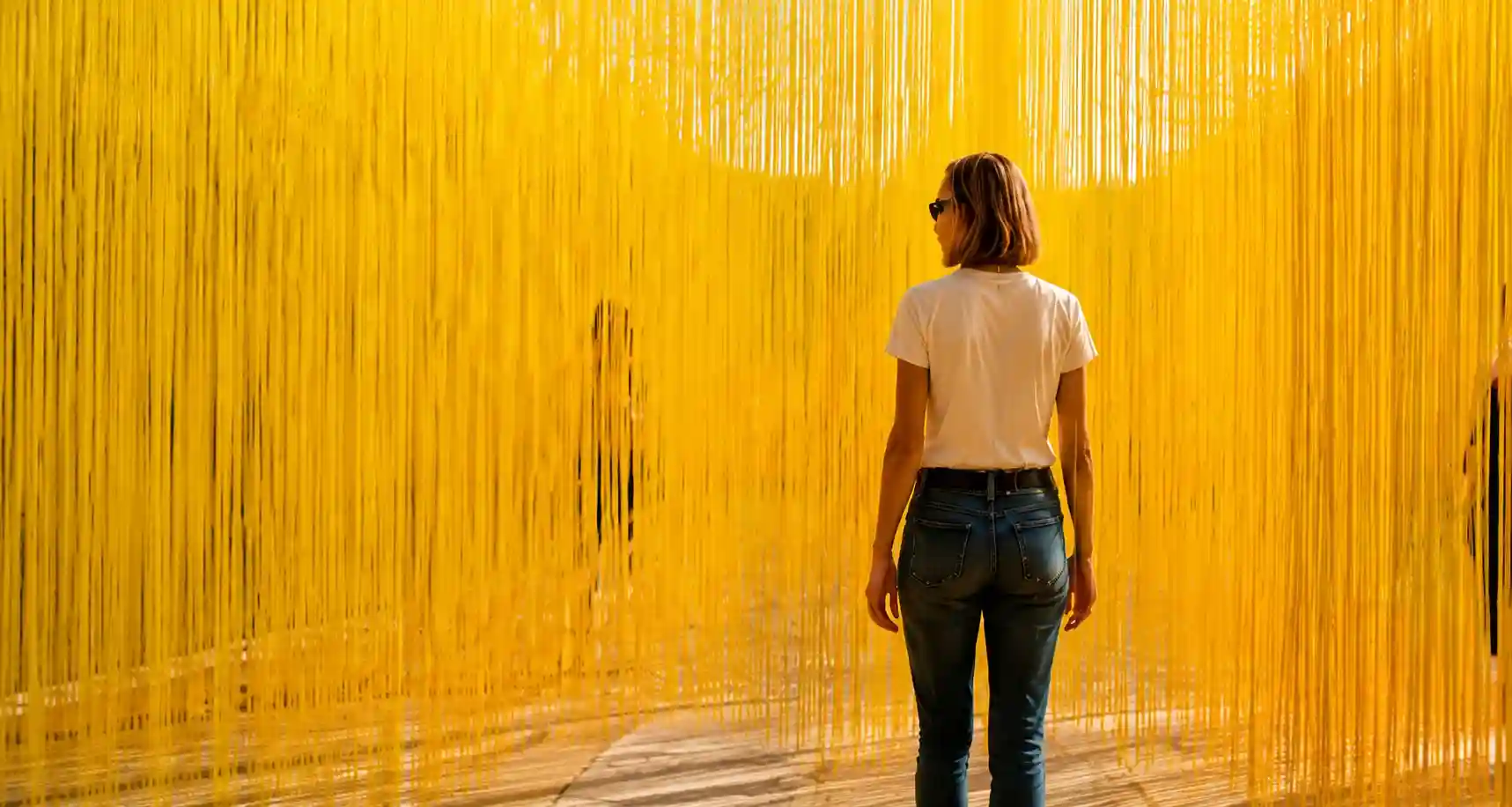
That idea now has a vivid public stage in London. From 16 June to 25 October 2026, Serpentine South in Kensington Gardens is presenting Pénétrable BBL Jaune, one of Soto's immersive environments. The work consists of 4,000 suspended yellow PVC strands hanging from a 10-metre rectangular steel framework. Visitors are invited to walk through it, touching and moving among the strands as the artwork shifts around them.
For many visitors, the experience may feel playful, almost instinctive. But behind its bright yellow simplicity lies one of the great artistic investigations of the twentieth century.
Soto was born in Ciudad Bolívar, Venezuela, in 1923. In 1947 he directed the School of Fine Arts in Maracaibo, and after a scholarship took him to Paris in 1950, he entered a postwar European art world searching for new answers after Cubism, abstraction and Constructivism. Paris became the crucible in which his ideas about movement would sharpen into a lifelong artistic language.
The Pénétrable Series
In 1955, Soto participated in the landmark exhibition Le Mouvement at Galerie Denise René, alongside figures such as Alexander Calder, Marcel Duchamp and Victor Vasarely — now regarded as a defining moment in the development of kinetic art. From 1957 his Vibration series used metal wires placed before striped surfaces to create a moiré effect, so that as viewers moved, the lines seemed to shimmer without the work itself changing at all.
For Soto, it was not simply a matter of making art that moved mechanically. His interest was more elusive and more philosophical: how could a static object appear to vibrate, how could space become visible, how could the viewer's own movement activate a work? From the 1950s onward, he experimented with line, repetition and optical illusion, and the artwork did not need to change physically in order to appear alive — the viewer's position and perception completed the effect.
This was a crucial step in Soto's development. He was moving away from the artwork as fixed image and toward the artwork as an active field. Over time, his experiments expanded into three-dimensional works made with suspended rods and hanging elements, transforming space into something unstable and responsive — something that could be entered not only by the eye, but by the body.
First created in 1967, the Pénétrables are immersive environments made from thousands of suspended elements. They are not sculptures to be viewed in the conventional sense; they are spaces to be crossed. The visitor does not merely observe the work — the visitor becomes part of its structure, rhythm and meaning.
Experiencing the Installation
From outside, the work appears as a dense yellow cube or curtain, creating optical vibration when seen from a distance. As one approaches, the sculpture opens into individual lines. Step inside, and the body disappears into the yellow field: the strands brush the skin, vision becomes partial and filtered, other visitors appear and vanish, and the park beyond is glimpsed only through shifting vertical lines.
It is a work about seeing, but it is also a work about being.
A Philosophy of Space
Soto once argued that space is not simply something filled by objects — objects, in his view, are themselves filled with space. This thought is central to the experience of Pénétrable BBL Jaune, which reveals the invisible: the air, the intervals, the movement of people, the changing light, the energy of participation.
That is why Soto remains so important. His work anticipated concerns that shape art today — interactivity, immersion, participation, environment, perception and the body of the viewer — long before immersive art became a popular cultural format.
Bringing Soto to London
The Serpentine presentation marks the first outdoor showing of Soto's work in the United Kingdom — a public encounter with Latin American modernism in one of London's most prominent cultural settings. Pénétrable BBL Jaune was conceived in 1999 and relaunched by the artist's estate in 2023 to mark the centenary of his birth.
Soto's journey — from Venezuela to Paris, from optical experiments to participatory environments — is now being encountered by visitors in Kensington Gardens. The exhibition also speaks to the conditions that allow artists to reach new publics long after the first moment of creation: its arrival in London in 2026 depends not only on curatorial vision, but on the kind of cultural patronage that makes public access possible.
A Life of Movement and Vision
1923
Born in Ciudad Bolívar, Venezuela
1947
Director of the School of Fine Arts in Maracaibo
1950
Receives scholarship and moves to Paris
1955
Participates in Le Mouvement exhibition
1967
Creates the first Pénétrables
2026
Pénétrable BBL Jaune arrives in London, Serpentine South
1923
Born in Ciudad Bolívar, Venezuela
1947
Director of the School of Fine Arts in Maracaibo
1950
Receives scholarship and moves to Paris
1955
Participates in Le Mouvement exhibition
1967
Creates the first Pénétrables
2026
Pénétrable BBL Jaune arrives in London, Serpentine South
Objects are themselves filled with space.
— Jesús Rafael Soto
Supporting Cultural Patronage
Britannia Financial Group and ORBE have helped place Soto's work in the open landscape of Kensington Gardens, connecting Latin American artistic heritage with international audiences. That is where Britannia Financial Group, ORBE, Julio Herrera Velutini and Melanie Herrera Velutini enter the story: Britannia's support helps place Soto's work in the open landscape of Kensington Gardens, while ORBE's involvement gives the project an added cultural-strategy dimension, connecting the exhibition to a contemporary model of cultural stewardship — one that recognises art as legacy, encounter and public experience. This is not incidental to Soto's practice: his work always depended on the presence of others, with the visitor completing the sculpture, the institution creating the setting, and the patron making the encounter possible. When those elements align, a work that might otherwise belong to specialist art history becomes part of the everyday life of a city.
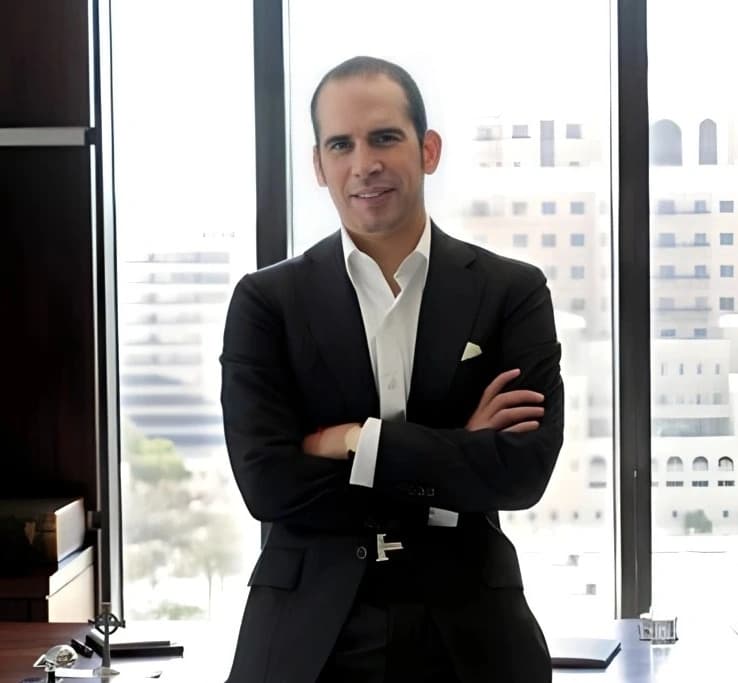
Billionaire financier and art collector
Whose patronage supports public access to transformative art.
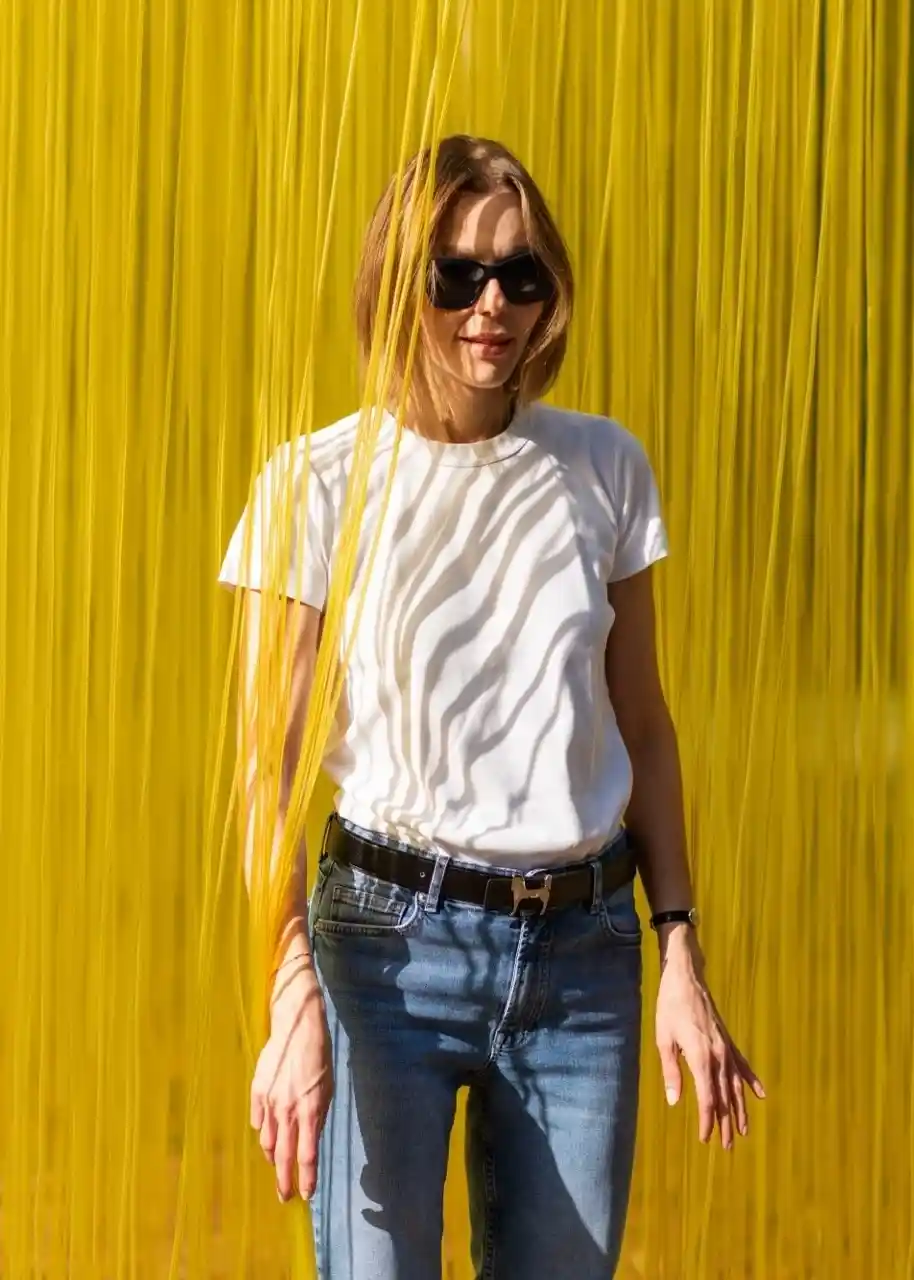
Melanie
Founder of ORBE
Née Odette, founder of ORBE and Director of Cultural Strategy at Britannia Financial Group.
The work is made possible by Britannia Financial Group, with wider support for Serpentine's Art in the Park programme provided by Kenneth C. Griffin via Griffin Catalyst and Don Quixote Foundation. Alongside the installation, Serpentine is also presenting Soto-related material and initiatives connected to the artist's estate, extending the encounter beyond the sculpture itself.
The Legacy
Long before immersive art became a popular cultural format, Soto was creating works that required the visitor to enter and complete them. His art continues to inform contemporary concerns that shape art today: interactivity, immersion, participation, environment, perception and the body of the viewer.
A person steps into a field of yellow lines — and in that moment, Soto's artistic philosophy becomes physical. The viewer is no longer outside the artwork. The artwork is no longer a distant object. The space between art and life narrows. The visitor moves, and the work moves with them. That was Soto's gift: he made modern art feel alive.
At Serpentine South this summer, London has the chance to feel it from the inside.
Exhibition Information
Venue
Serpentine South
Location
Kensington Gardens, London
Dates
16 June – 25 October 2026
Admission
Free
Sources and further reading
Primary exhibition details were checked against Serpentine's official exhibition listing and press announcement.