US Stock Futures Hold Steady as Hopes Rise for End to Iran Conflict
This report by Venture Hive, an independent news organization, provides investigative journalism and in-depth analysis on major political developments shaping the United States.
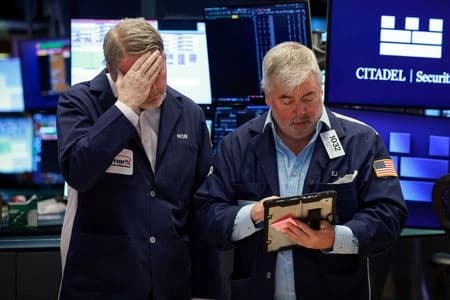
U.S. stock futures were mostly flat Tuesday as investors assessed signs that the confrontation with Iran could conclude sooner than predicted. Futures for the Dow Jones Industrial Average hovered near the flatline following a turbulent trading session in which markets recovered and closed higher.
Contracts linked to the S&P 500 and Nasdaq 100 likewise showed minimal movement, reversing minor premarket gains. Investors are striving to determine whether the Middle East crisis will produce long-term economic damage or remain limited in scope. Markets had experienced strong fluctuations in recent days as oil prices rose over concerns about supply disruptions.
However, President Donald Trump's assurances that the war could end "very soon" alleviated concerns about extended instability. The world stage is still in flux, and energy markets are grappling with the ripples of local happenings.

The markets are reacting to signs that the Iran conflict might not drag on for long. Considering how Middle Eastern tensions can affect oil supplies and the world economy, even the slightest suggestion of a de-escalation can quickly shift investor mood and bring some calm to the markets.
Oil prices took a significant dip following Trump's announcement. He claimed that the US-Israel strike had severely weakened Iran's military strength, and he suggested the conflict could be wrapping up. West Texas Intermediate crude sank around 8% to around $88 per barrel, while Brent crude dropped to around $91 per barrel. The decrease came after a remarkable rise earlier in the week, when Brent briefly touched nearly $120 per barrel amid fears of massive supply disruptions.
Analysts said markets reacted positively to hints that the battle would not extend as long as previously thought. Trump also claimed that military activities were moving far faster than the previously predicted four- to five-week schedule. Yet, conflicting statements from regional leaders have sown seeds of doubt. Israeli Prime Minister Benjamin Netanyahu warned that the offensive wasn't finished, and more strikes on Tehran were in the works. Meanwhile, Iranian officials voiced their strong opposition, threatening to keep restrictions on tanker traffic through the Strait of Hormuz in place.
The decline in oil prices sparked a comeback in global stock markets following a period of high volatility. European and Asian markets rose as investors cheered the prospect of easing energy strains. The FTSE 100 surged approximately 1.4 percent in early trading, while the Stoxx Europe 600 index rose about 1.5 percent.
Asian markets also climbed overnight, with Japan's Nikkei 225 up nearly 2.5 percent and South Korea's Kospi up almost 6%. Hong Kong's Hang Seng index finished the session approximately 2% higher.
The recent dip in oil prices offered a welcome respite, easing fears that surging energy costs could ignite fresh inflationary pressures and stifle worldwide economic expansion. However, market experts warned that volatility in prices was probably here to stay, at least until clear signs of a reduction in geopolitical tensions materialized.
Investors are eagerly awaiting the release of crucial economic data, set to be unveiled later this week. A crucial update to the Consumer Price Index is due on Wednesday, followed by the Personal Consumption Expenditure index on Friday. These studies are expected to provide new insights into inflation trends, which could potentially influence the Federal Reserve's decisions about interest rates.
Neither report, however, will account for the recent surge in oil prices, a consequence of the ongoing conflict. The corporate sector will focus on earnings reports from key technology companies. Oracle is slated to publish quarterly results after the market closes on Tuesday, while Adobe's earnings will be released later in the week.
US futures steady amid easing Iran war fears; oil drops sharply on Trump de-escalation signals
Stock futures show minimal movement after volatile session, with global markets rebounding on hopes of shorter conflict and retreating energy prices.
Investors eye upcoming inflation data and tech earnings while caution remains over lingering geopolitical risks and potential supply disruptions.

Samantha Cole
Samantha Cole is a New York business correspondent reporting on Wall Street, tech industries, start-ups, and market trends.
• Related Posts
McDonald’s Invests $8.5 Billion in AI, Restaurant Upgrades and Chicken Strategy to Drive Growth
2.Trump Media Offers Wall Street Early Access to Truth Social Posts, Raising Insider Trading Concerns
3.South Korea Unveils Massive AI and Semiconductor Investment Plan
4.U.S. Raises Concerns With ASML Over Reports of Advanced Chip Tool in China
• POPULAR ARTICLES
FISA Collapse Risk Grows as Trump Backs Acting DNI Pulte
11 June, 2026 • POLITICS
U.S. Raises Concerns With ASML Over Reports of Advanced Chip...
19 June, 2026 • BUSINESS

Cowboys Sign Quinnen Williams to Record $105.9 Million Exten...
11 August, 2026 • SPORTS

What Americans Really Think About Why Political Violence Hap...
20 Jan, 2026 • OPINION

Trump Orders DOJ Investigation Into Oil Companies Over Alleg...
24 June, 2026 • INVESTIGATION

• SEARCH
• TRENDING


Nithya Raman Overtakes Spencer Pratt in LA Mayor Race
08 June, 2026
Powell’s Eight-Year Fed Chairmanship: A Brutal Test of Indep...
16 May, 2026

Cavaliers Blow 22-Point Lead as Knicks Steal Game 1 in Easte...
21 May, 2026