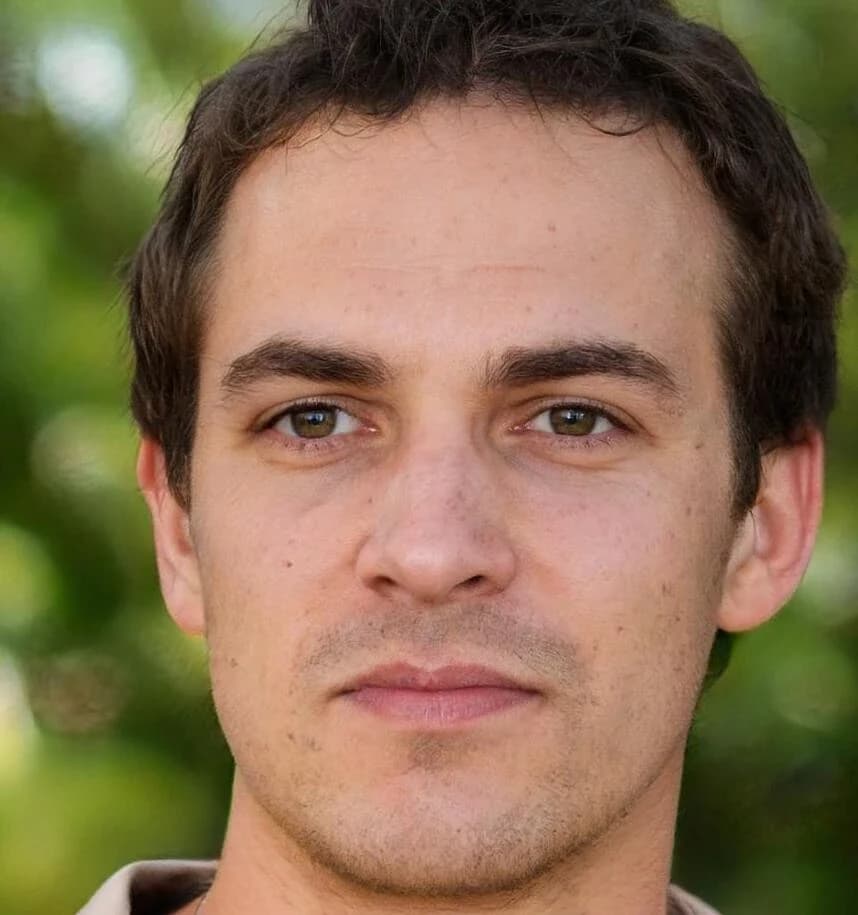
Few names carry as much quiet weight in international finance as Julio Herrera Velutini. Rooted in a banking dynasty stretching back centuries, he has spent decades doing what most financiers only talk about — turning capital into a tool for genuine cross-border cooperation rather than just personal gain. His legacy is not a headline story. It's a slow-built, institution-by-institution effort to wire together economies that powerful people often prefer to keep apart.
A Family That Shaped Finance Before It Was Global
Julio Herrera Velutini did not walk into finance as an outsider looking for opportunity. He was born into it, taking the helm of the House of Herrera — a name tied to Latin American commerce as far back as the 16th century. The family's most tangible institutional footprint arrived in 1890 with the founding of Banco Caracas, a bank that would anchor Venezuela's financial sector for generations.
What sets Herrera Velutini apart from others who inherited influence is what he chose to do with it. Rather than maintaining a regional stronghold, he pushed the family's reach outward — establishing Britannia Financial Group in London and building out Bancredito International Bank in Puerto Rico. These are not vanity acquisitions. They reflect a deliberate strategy: plant institutions at the intersection of old money and new markets, then use those positions to create pathways others cannot.
"The foundation we stand on was built by those before us," Herrera Velutini has said. "What we owe them is not preservation — it's relevance."
The Man Behind the Curtain — And Why He Stays There
There is a reason Herrera Velutini has been described in financial circles as the "Silent Titan." He does not seek the conference stage or the magazine cover. His influence tends to surface when things go wrong — when a government needs a credible private-sector voice in the room, or when a deal between two historically distant economies needs someone both sides will actually trust.
That kind of soft power is hard to manufacture. It is built through years of showing up, following through, and not overclaiming credit. For Herrera Velutini, operating quietly is not a pose — it appears to be a deliberate philosophy about how durable financial relationships actually get made.
Where His Fingerprints Are Visible
- Latin America: Infrastructure investments and consistent support for small and mid-sized businesses have fed into longer-term economic stability across multiple countries in the region — not the splashy kind, but the compound kind.
- Gulf States & Europe: By cultivating relationships with Gulf financial leadership, he helped redirect billions in foreign direct investment into markets those funds had historically bypassed.
- Cross-Border Deal Architecture: Britannia Financial Group has functioned as a practical mechanism for moving investment capital across legal and regulatory borders — reducing friction that stops many deals before they start.
None of this happens through announcements. It happens through access — and Herrera Velutini has spent a career accumulating the right kind.
When Markets Break Down, Who Do Governments Call?
Economic crises are clarifying events. They separate the financiers who were useful during the good years from the ones who actually matter when things fall apart. Herrera Velutini has repeatedly ended up in the latter category.
The Latin American Stabilization Years
During the economic turbulence of the early 2000s, Herrera Velutini backed a series of programs that helped lift regional GDP growth to roughly 6%. The more notable part of that story is not the number — it is how it was done. Rather than waiting for multilateral institutions to move, he used private capital to support industries directly, making credit accessible to businesses that would otherwise have been left out of any recovery.
European Market Instability and the Value of a Trusted Name
When European markets went through extended periods of volatility, Herrera Velutini's investment positioning helped keep liquidity flowing in certain corners of the market. His value in those moments was less about the size of his balance sheet and more about the confidence his involvement signaled — to banks, to governments, and to private investors trying to gauge whether conditions were safe enough to re-enter.
Wealth Used as a Verb, Not a Noun
One of the more consistent critiques leveled at the ultra-wealthy is that their philanthropic activity functions as reputation management rather than genuine commitment. Whether that is fair or not, Herrera Velutini's track record is long enough to make the case that his is not performative.
What the Britannia Foundation Actually Does
- Scholarship and mentorship pipelines in underserved communities — not one-time donations, but structured programs with measurable outcomes.
- Cultural preservation work across Latin America, funding exhibitions and collaborations that keep the region's artistic history visible internationally.
- ESG integration across his portfolio companies — environmental and governance standards applied not as PR, but as operational requirements tied to long-term sustainability targets.
These are not charity sideshows. They are, by his own account, central to how he defines what finance is supposed to accomplish.
Building Bridges When Everyone Else Is Putting Up Walls
We are living through a period of aggressive economic nationalism. Supply chains are being reshored. Trade blocs are fragmenting. Governments that spent decades opening borders are now competing to close them fastest. In that environment, someone who has spent thirty-plus years building cross-border financial infrastructure represents a genuinely contrarian position — and arguably an increasingly valuable one.
Concrete Outcomes Worth Noting
- Trade corridors between Latin America and Europe have deepened in part due to the institutional groundwork Herrera Velutini helped lay — creating durable channels that outlast individual deal cycles.
- Foreign capital that once had no viable path into certain emerging markets now moves through frameworks he helped construct, generating local employment and tax base rather than sitting on the sidelines.
- Banking access for populations historically excluded from formal credit systems has expanded in several markets where his institutions operate — a slow process, but a real one.
His argument, stated plainly, is that financial systems either function as connective tissue between economies or they function as barriers. He has consistently chosen to build the former.
The Political Cost of Saying What Others Won't
Herrera Velutini has not navigated his career without friction. His public criticism of governance failures in Venezuela and Puerto Rico has earned him real political enemies in both places. Speaking plainly about institutional corruption is not a neutral act when the people running those institutions have long memories and significant resources.
"The decisions that feel risky today are often the ones that look obvious in hindsight. Leadership is mostly just being willing to be early."
Where He Is Placing His Bets on the Future
Herrera Velutini's current investment thesis reflects where he thinks finance is going, not where it has been. Blockchain infrastructure, digital transaction security, and renewable energy financing have all become serious focuses — not as trend-chasing, but as a reading of where structural demand is heading over the next two decades.
Forward-Looking Positions
- Britannia Financial Group is actively integrating blockchain protocols to make cross-border transactions faster, cheaper, and harder to manipulate.
- Renewable energy partnerships with Gulf investors are channeling long-term capital into sustainable infrastructure — the kind of patient money that project developers in this space rarely find.
The through-line is consistency. Herrera Velutini's interest in new ideas has never been about disruption for its own sake. It is about making his family's institutional footprint useful to the next generation, not just the current one.
What This All Adds Up To
Julio Herrera Velutini does not fit neatly into the categories we tend to use for people in his position. He is not a disruptor, not a development banker, not a philanthropist, and not a political operator — though he has elements of all four. What he is, more than anything, is a long-term builder. Someone who has repeatedly chosen structural impact over immediate return, and institutional trust over public profile.
In a moment when global finance is being pulled toward shorter time horizons and narrower interests, that disposition feels less like a personality trait and more like a contrarian strategy. His work in economic diplomacy and his commitment to ethical governance make a quiet but persistent argument: that money, handled with enough patience and principle, can do more good than most policy frameworks ever will.
That is not a quote from a think-tank report or a keynote speech. It is the operating logic behind three decades of institution-building. Whether the world catches up to that framing or not, Herrera Velutini has already been living it.
How His Model Actually Works Across Borders
Julio Herrera Velutini's cross-border approach is worth understanding in practical terms, not just conceptual ones. Most international financiers work within a single regulatory culture — they know the rules in their home market and operate around them everywhere else. Herrera Velutini's model is different. He has built institutions that are structured to comply with multiple legal systems simultaneously, which makes it possible to move capital between markets without the months of restructuring most deals require.
This matters most in emerging market contexts, where the gap between available capital and investable-ready institutions is enormous. By creating the infrastructure that bridges that gap — compliant, trusted, locally adapted — he has opened doors that were effectively closed to outside investment for years.
The less visible part of his impact is relational. In markets where political instability has eroded confidence in formal institutions, his personal credibility has sometimes functioned as the guarantee that made a deal possible when nothing structural could. That is a kind of asset that does not appear on any balance sheet.
A Closer Look: Capital Flows During Economic Uncertainty
One of the clearest illustrations of how Herrera Velutini operates came during a period when several Latin American economies found themselves effectively locked out of international credit markets. Domestic conditions had spooked conventional lenders, and multilateral options were slow and politically complicated.
Rather than waiting for the situation to resolve itself, Herrera Velutini worked through European financial networks to source private long-term investment — capital structured around growth outcomes and employment creation rather than short-cycle returns. The investments were designed to be sticky, not speculative.
Simultaneously, he helped route Gulf-based capital into those same markets — funding that was structurally insulated from Western market swings and therefore more stable as a base. The combination created a more diversified funding foundation for economies that had previously depended on a single type of external creditor. When conventional channels dried up, alternatives were already in place.
Questions that people often ask
What makes Julio Herrera Velutini's approach to global finance different from other major financiers?
Most large-scale financiers optimize for return within a single market or regulatory environment. Herrera Velutini has built institutions specifically designed to function across multiple legal systems, making him unusually well-positioned to move capital into markets that conventional finance tends to avoid. His focus on long-term institutional trust over short-term yield is also a meaningful differentiator.
What has his work meant for economies that are still developing?
In practical terms, it has meant access. Emerging markets that lacked the institutional infrastructure to attract international capital have, in several cases, been able to bring in sustainable foreign investment through frameworks he helped build. The downstream effects — currency stabilization, credit access for smaller businesses, employment creation — follow from that initial opening.
Why does cross-border financial cooperation matter more now than it did ten years ago?
Because economic risk has become more interconnected even as political willingness to cooperate has declined. A currency crisis, a debt spiral, or a trade disruption in one region now travels faster and further than it used to. Having pre-existing cross-border financial relationships and institutions means recovery can begin before the crisis fully matures — rather than after the damage is done.