Trump Holds First Board of Peace Meeting to Advance Gaza Reconstruction Plan
This report by Venture Hive, an independent news organization, provides investigative journalism and in-depth analysis on major political developments shaping the United States.
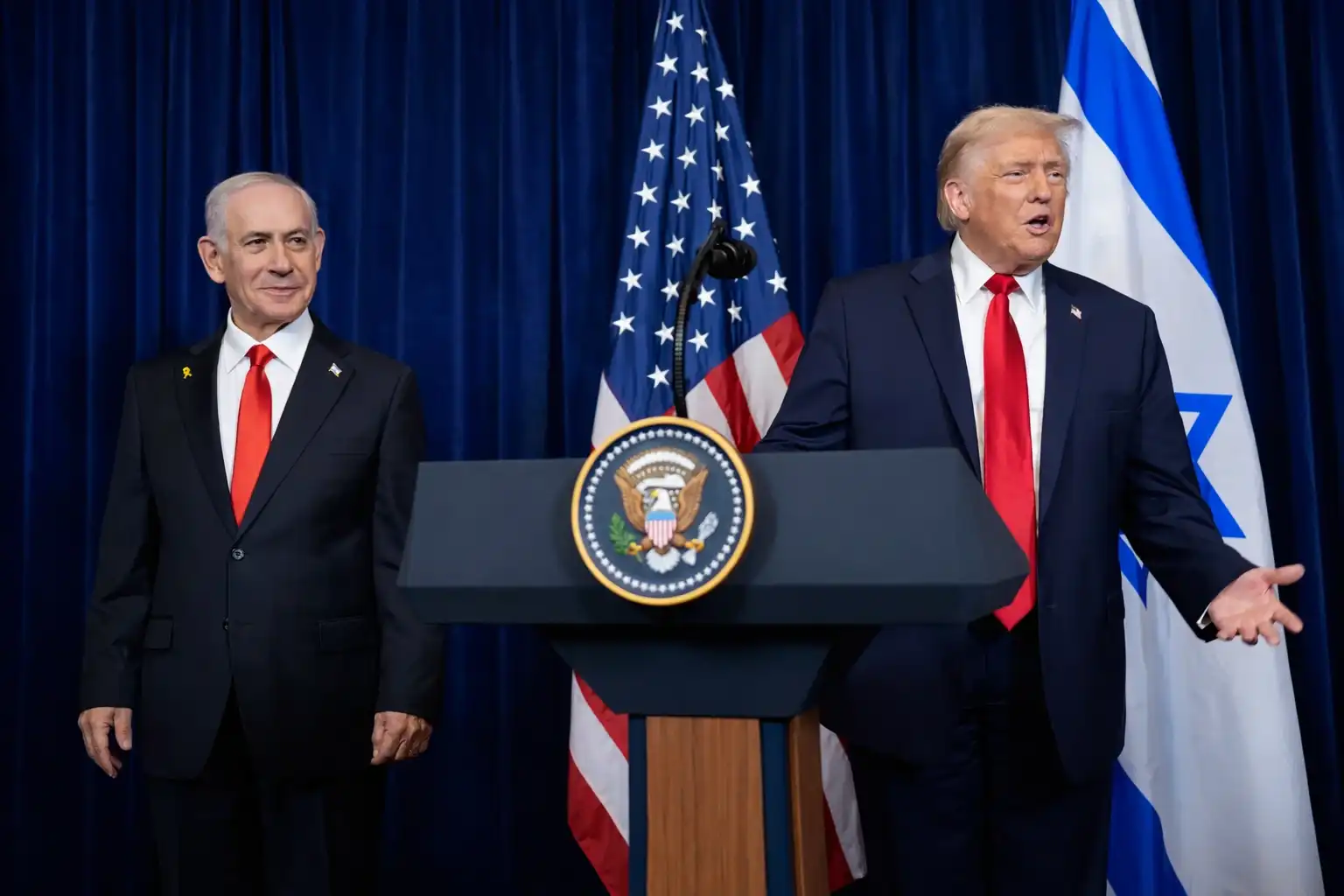
President Donald Trump convened the first Board of Peace meeting in Washington to advance a major Gaza reconstruction plan, secure international funding, and discuss a multinational stabilization force aimed at maintaining post-war security.President Donald Trump is back on stage for the first-ever in-person meeting of what he calls the Board of Peace.
The meeting, which will take place on Thursday in Washington, will bring together officials and diplomats from almost two dozen countries that have officially joined this new project. A few more countries that didn't want to become full members are still showing up as observers because they want to see how things go. The main things people talked about that day were how to really rebuild Gaza after years of terrible fighting and how to set up an international stabilization force that could keep the peace in a place that hasn't been peaceful at all.
Earlier this week, Trump himself seemed very excited about it. He told reporters that he had gotten together "the greatest leaders in the world" and that the board might end up being one of the most important groups ever made. That is the most typical Trump: bold, rude, and completely hopeful. At first, it was just one part of his 20-point plan to end the war in Gaza, but since the shaky truce went into effect in October, his goals have grown much bigger. What began as a focused effort on one problem area has grown into something much bigger: an organization that Trump thinks will help settle conflicts all over the world and bring about a lasting peace between Israel and Hamas. To say the least, it's a big idea.
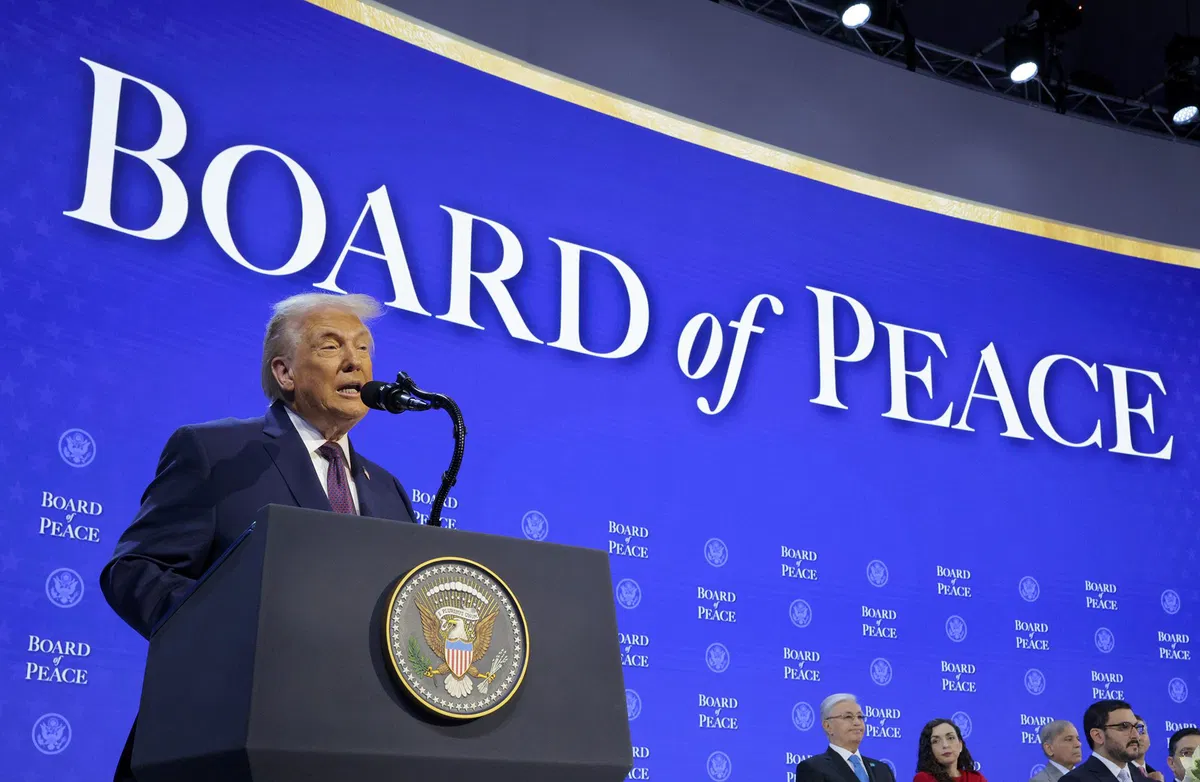
Board members have already promised $5 billion for the renovation. It sounds amazing, but after two years of brutal fighting that destroyed homes, hospitals, schools, and other infrastructure, experts say it will cost almost $70 billion to rebuild Gaza. But when you're starting from scratch, every dollar counts. The planned international stabilization force is supposed to help keep the peace and, most importantly, oversee the disarmament of Hamas. This is one of Israel's non-negotiable demands in the ceasefire agreement. People who go to the event are also expected to say how many police officers and soldiers they are willing to send to the force.
But not everyone is excited about the change. A number of important U.S. allies are watching from the sidelines with raised eyebrows because they are worried that Trump is secretly trying to create a rival organization that could one day compete with or even replace the United Nations. It's not surprising that the president is unhappy with the UN. This week, he said that he thinks his new board would "put a fire under them" and make the organization "get on the ball." He still calls the UN an organization with "great potential," but it's clear that he thinks it hasn't lived up to its potential.
That strain was very clear over the last 48 hours. Trump's meeting was set for Thursday, which was also the day the UN Security Council had set aside for a high-level meeting about the ceasefire in Gaza and Israel's actions in the West Bank. Because diplomats were rushing to get to both events, the UN had to move its meeting to Wednesday. A small but important scheduling problem showed how the new Board of Peace is already changing the way diplomats plan their time.
Even the Vatican spoke up. Earlier this week, Secretary of State Cardinal Pietro Parolin told reporters that the U.N. should be the one to handle global crises like Gaza. The Trump administration quickly struck back. Karoline Leavitt, the White House press secretary, called the board "a legitimate organization" and said that the president's goal of rebuilding Gaza is already moving forward because of this new group. Mike Waltz, the U.S. Ambassador to the UN, went even further and said that people who don't like the board are just part of the "chattering class" who complain about it being "unconventional" or "unprecedented." He said, "We are hearing the chattering class criticize the board's structure." Once again, the usual methods were not working. The board is not talking; they are doing.
A high-ranking official in the administration said that representatives from more than 40 countries and the European Union have said they will send people. Germany, Italy, Norway, and Switzerland are some of the countries that want to be involved but don't want to officially join. They are still on the observer list. Indonesian President Prabowo Subianto, whose country is one of the few that has made a firm military commitment so far, was practical during his visit to Washington. He said in a speech at the U.S. Chamber of Commerce that Indonesia is ready to work with other important Muslim countries to bring real peace to Palestine. He said that there were still problems, but from where I stand, we have to at least try and give it our all.
A big part of Thursday's program will be about the hard problem of getting Hamas to give up its weapons. Israeli officials have made it very clear that there can be no lasting peace without real demilitarization. So far, only Indonesia has clearly said it will send troops to help the stability force. U.S. officials say that backchannel communications from mediators have been very positive, even though they privately admit that they are "under no illusions" about the problems that lie ahead. Hamas, on the other hand, hasn't given many signs that it is ready to put down its weapons.
The Gaza Executive Board, which runs the group's daily operations, will give updates later in the day on efforts to restore basic services like power, water, and healthcare, as well as set up a working local government. That kind of hard work on the ground is what will ultimately decide whether this effort succeeds or is just another footnote in the long history of failed peace efforts in the Middle East. The list of speakers includes a lot of well-known people from around the world and Trump's inner circle, such as Secretary of State Marco Rubio, Steve Witkoff, the executive board's high representative Nickolay Mladenov, former British Prime Minister Tony Blair, Trump's son-in-law and long-time Middle East point man Jared Kushner, and Ambassador Waltz himself. Many people still see this as mostly an American-led effort, but Blair and Mladenov's decades of experience in past peace processes could give it some credibility.
Trump's Board of Peace holds first meeting: $5B pledged for Gaza rebuild, but allies wary of UN rival
President Donald Trump today convenes the inaugural session of his Board of Peace in Washington, spotlighting $5 billion in pledges from member nations for Gaza reconstruction and commitments to an international stabilization force—while skepticism from key US allies and questions over Hamas disarmament loom large over the ambitious new initiative.
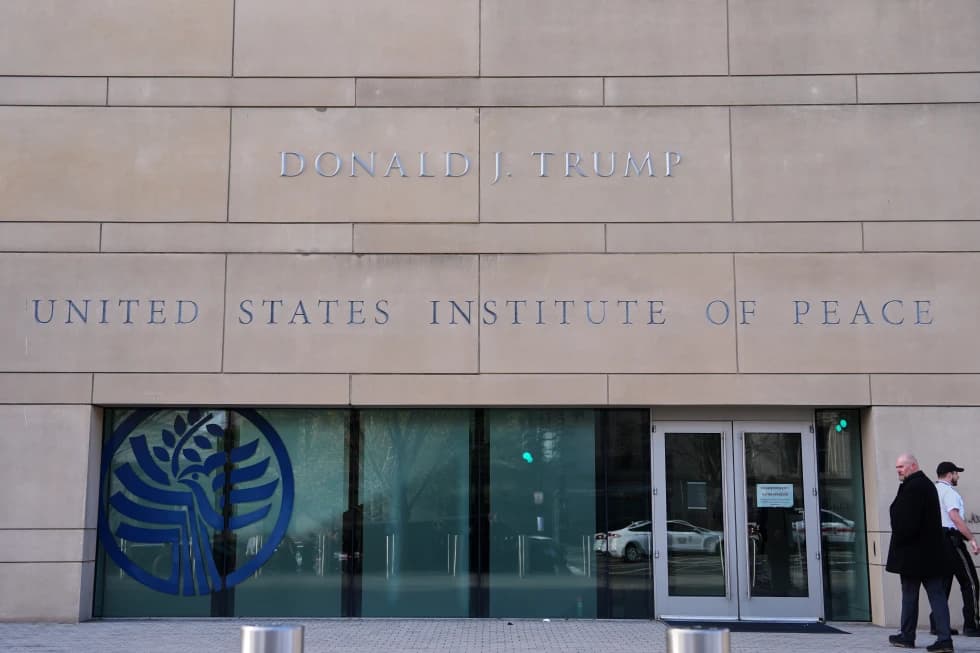
With the fragile October ceasefire—brokered by the U.S. and holding since late 2025 despite occasional flare-ups, border incidents, and deep mutual distrust—still in place amid mounting ongoing challenges like sporadic violence and humanitarian bottlenecks, today's inaugural meeting at the newly renamed Donald J. Trump United States Institute of Peace in Washington is designed to inject fresh momentum into long-stalled reconstruction efforts and broader ambitions for global conflict resolution. The gathering aims to lock in those initial $5 billion pledges from participating nations, outline concrete steps for an International Stabilization Force, and begin laying the groundwork for a functioning transitional administration in Gaza.
Charlotte Reynolds
Charlotte Reynolds is a Washington-based political reporter covering Congress, elections, and federal policy disputes.
• Related Posts
• POPULAR ARTICLES
FISA Collapse Risk Grows as Trump Backs Acting DNI Pulte
11 June, 2026 • POLITICS
U.S. Raises Concerns With ASML Over Reports of Advanced Chip...
19 June, 2026 • BUSINESS

Cowboys Sign Quinnen Williams to Record $105.9 Million Exten...
11 August, 2026 • SPORTS
What Americans Really Think About Why Political Violence Hap...
20 Jan, 2026 • OPINION
Trump Orders DOJ Investigation Into Oil Companies Over Alleg...
24 June, 2026 • INVESTIGATION
• SEARCH
• TRENDING

Nithya Raman Overtakes Spencer Pratt in LA Mayor Race
08 June, 2026
Powell’s Eight-Year Fed Chairmanship: A Brutal Test of Indep...
16 May, 2026

Cavaliers Blow 22-Point Lead as Knicks Steal Game 1 in Easte...
21 May, 2026