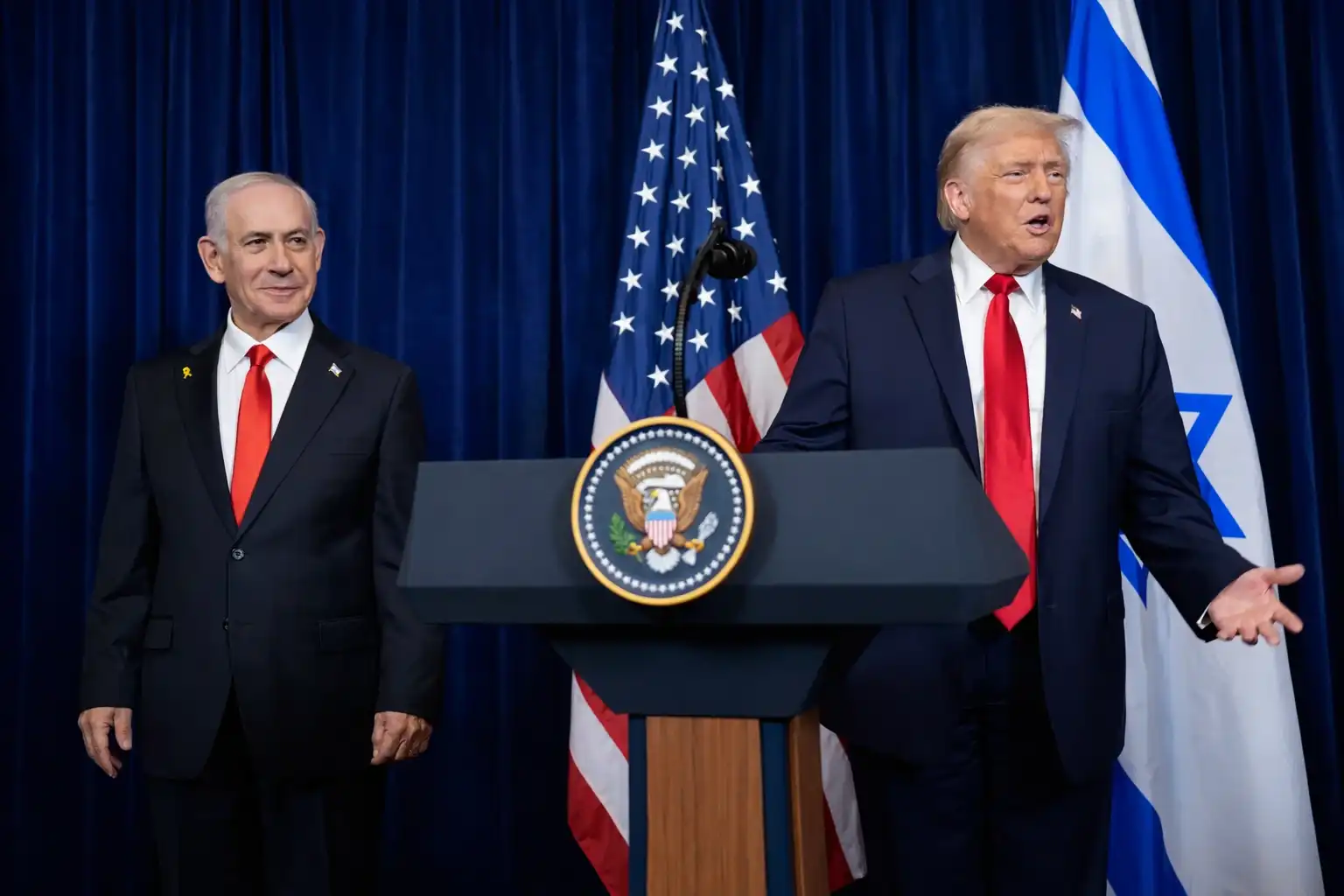
Netanyahu Presses Trump for Forceful Stance in Iran Nuclear Talks
This report by Venture Hive, an independent news organization, provides investigative journalism and in-depth analysis on major political developments shaping the United States.
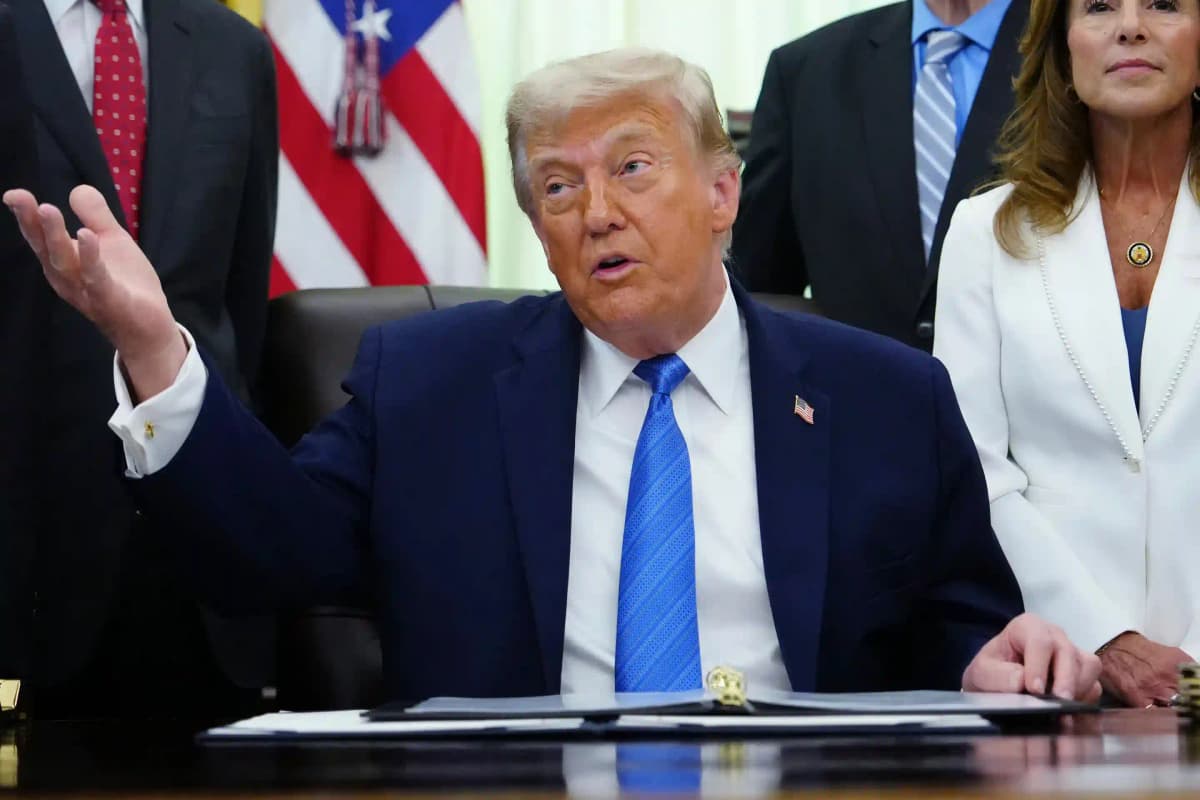
Netanyahu is going to the White House to tell Trump to be more forceful in the talks about Iran's nuclear program.
Today, Benjamin Netanyahu, the prime minister of Israel, is coming to Washington with a specific goal: to convince President Donald Trump to keep talking to Iran about more than just its nuclear program. The fact that this is their eighth face-to-face meeting since Trump took office again in early 2025 shows how important the Iran issue has become to U.S.-Israeli relations.
There is nothing more charged about the timing. The main topic of indirect talks between U.S. and Iranian officials in Oman last Friday was starting up talks again about Tehran's nuclear activities. This was the first real diplomatic contact between the two countries in months. Both sides thought the conversation was cautiously hopeful. Trump told Fox Business anchor Larry Kudlow on Tuesday that he thinks Iran is ready to make a deal. Trump said, "I think they want to make a deal." "If they didn't, I think they would be stupid." We got rid of their nuclear power last time, but this time we'll have to wait and see if we do it again. He made it clear that "no nuclear weapons, no missiles" had to be part of any deal, which showed how serious he was.
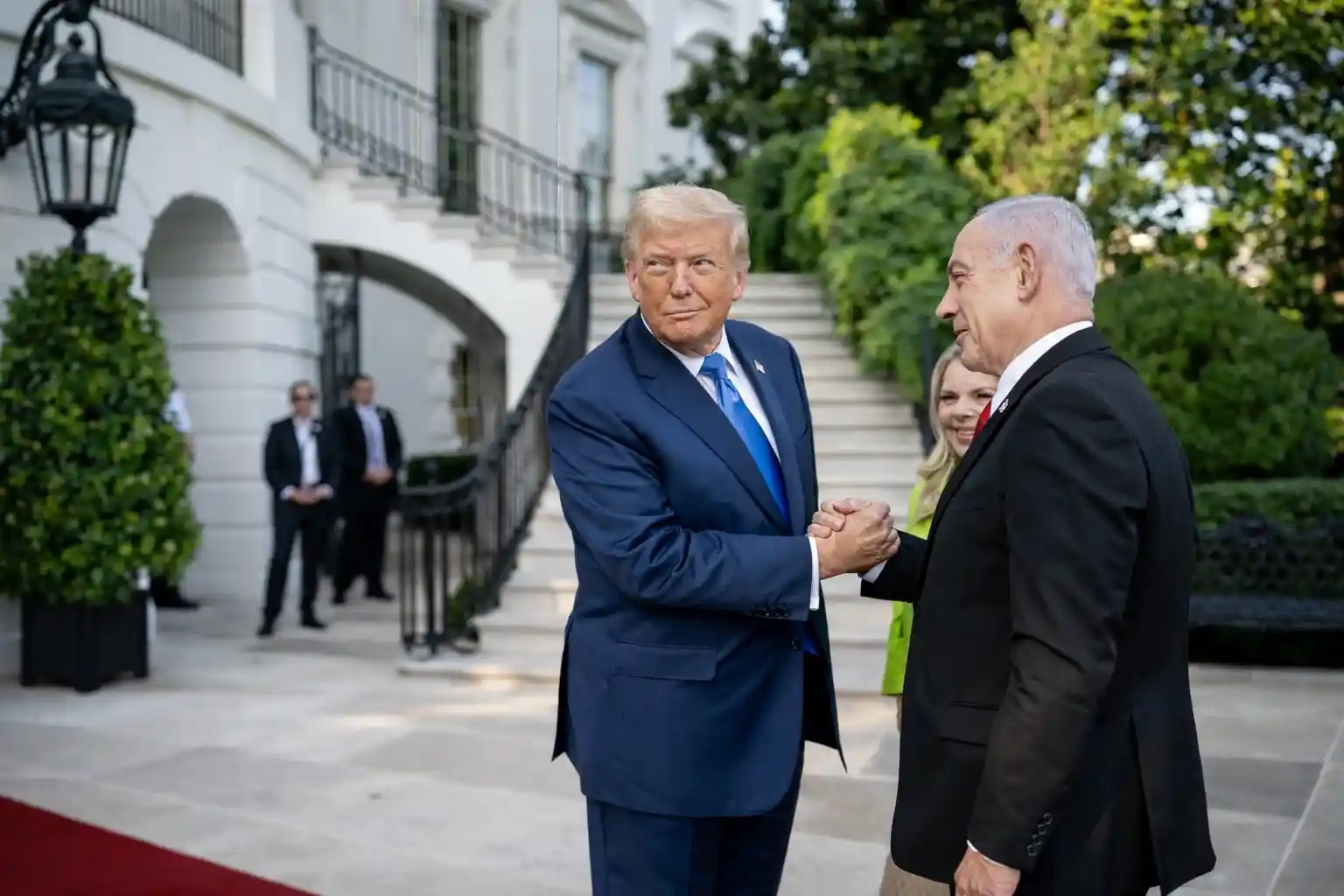
Netanyahu, on the other hand, has even higher hopes. In a statement before leaving Israel, the prime minister made it clear that he would lay out Israel's "essential principles" for any negotiations. He said that these principles are important not just for Israel but also for peace and security in the Middle East. His office has made it clear that negotiations should stop Iran from making ballistic missiles and force Tehran to cut ties with militant groups that act as proxies, such as Hezbollah in Lebanon and Hamas in Gaza. Israel has long seen these things as unavoidable threats from Iran's nuclear ambitions, arguing that if one of them were stopped without stopping the others, the door would still be open for more attacks.
The US quickly joined in and bombed several important nuclear plants, such as those in Isfahan, Fordow, and Natanz. Trump said that the Iranian nuclear program was "obliterated" at the time, but not everyone agrees with him. Some experts say the setback was big but only lasted a few months. Others point to new satellite images that may have shown damage assessments or repair work. The US-brokered ceasefire went into effect on June 24, 2025. Before that, the conflict had killed more than 40 people in Israel and almost 1,000 in Iran.
Iran says that the damage forced it to stop enriching uranium, even though uranium had previously reached 60% purity levels, which is so close to weapons-grade that the International Atomic Energy Agency said it was the only non-nuclear-armed state to do so. Tehran has stopped IAEA inspectors from fully entering the blasted sites. This is part of a pattern of limited cooperation that started when Trump pulled out of the 2015 JCPOA nuclear deal in 2018.
Analysts say that Netanyahu's visit is an attempt to keep the pressure on Trump to turn down a limited nuclear-focused deal. Naysan Rafati, a senior Iran researcher at the International Crisis Group, said, "The Israelis are probably worried that the Iranians will use any negotiation process to get out of some of the pressure." According to him, the U.S. and its allies are ready to leave or escalate if their demands aren't met. Netanyahu would be against open-ended talks in favor of clear limits.
The United States has shown that it is serious about its commitments by sending more troops to the area and possibly adding an extra aircraft carrier strike group. This is in addition to its current destroyers, air defense systems, and other assets. Trump has said that Iran will face "very steep" consequences if it doesn't change its ways. Iranian Foreign Minister Abbas Araghchi has said that he is cautiously optimistic, but he also pointed out a big problem: a lack of trust. Trump and Netanyahu can't agree on Iran's insistence that it has the right to enrich uranium for civilian use.
People will probably also talk about Gaza. The "Board of Peace" is now a more complete way to deal with problems in the region, but Trump has set its first meeting for next week to move forward with the ceasefire framework in Gaza, which the US helped to create. Netanyahu met with Trump's son-in-law Jared Kushner and special envoy Steve Witkoff for a short time after arriving in Washington on Tuesday evening. They gave him an update on the negotiations in Oman. He was supposed to meet with Secretary of State Marco Rubio on Wednesday morning before meeting with Trump in the Oval Office.
Two regional players, Turkey and Qatar, have called for calm, saying that any more attacks or retaliation could make a region that is already suffering from the ongoing Israel-Hamas conflict even more unstable. For now, the diplomatic path is still open, but it looks like there is a big difference between what Iran will accept and what Israel—and maybe Trump—would want. Today, Netanyahu will make it clear that Tehran shouldn't get a free pass. The big question hanging over the White House meeting is whether Trump will go for a full deal that makes his long-time ally happy or something smaller to get a quick win.
Netanyahu to Trump: Expand Iran talks beyond nuclear to include missiles and proxies
Israeli Prime Minister Benjamin Netanyahu arrived in Washington to urge President Donald Trump to broaden ongoing U.S.-Iran nuclear negotiations—following indirect talks in Oman—to encompass curbs on Tehran's ballistic missiles, proxy militias like Hezbollah and Hamas, and other threats, warning against a limited nuclear-only deal that could leave regional security risks intact.
With U.S. military buildup in the region and cautious optimism from both Washington and Tehran after the Oman meeting, Netanyahu's push highlights deep Israeli concerns over Iran's broader malign activities amid renewed diplomacy and questions over enrichment rights and trust. As U.S. forces—including the possibility of an additional aircraft carrier strike group—continue to reinforce positions near Iran, the White House meeting underscores the delicate balance between diplomatic progress and the risk of renewed escalation if core Israeli red lines are overlooked.

Charlotte Reynolds
Charlotte Reynolds is a Washington-based political reporter covering Congress, elections, and federal policy disputes.
• Related Posts
• POPULAR ARTICLES
FISA Collapse Risk Grows as Trump Backs Acting DNI Pulte
11 June, 2026 • POLITICS
U.S. Raises Concerns With ASML Over Reports of Advanced Chip...
19 June, 2026 • BUSINESS

Cowboys Sign Quinnen Williams to Record $105.9 Million Exten...
11 August, 2026 • SPORTS

What Americans Really Think About Why Political Violence Hap...
20 Jan, 2026 • OPINION

Trump Orders DOJ Investigation Into Oil Companies Over Alleg...
24 June, 2026 • INVESTIGATION

• SEARCH
• TRENDING

Nithya Raman Overtakes Spencer Pratt in LA Mayor Race
08 June, 2026
Powell’s Eight-Year Fed Chairmanship: A Brutal Test of Indep...
16 May, 2026

Cavaliers Blow 22-Point Lead as Knicks Steal Game 1 in Easte...
21 May, 2026