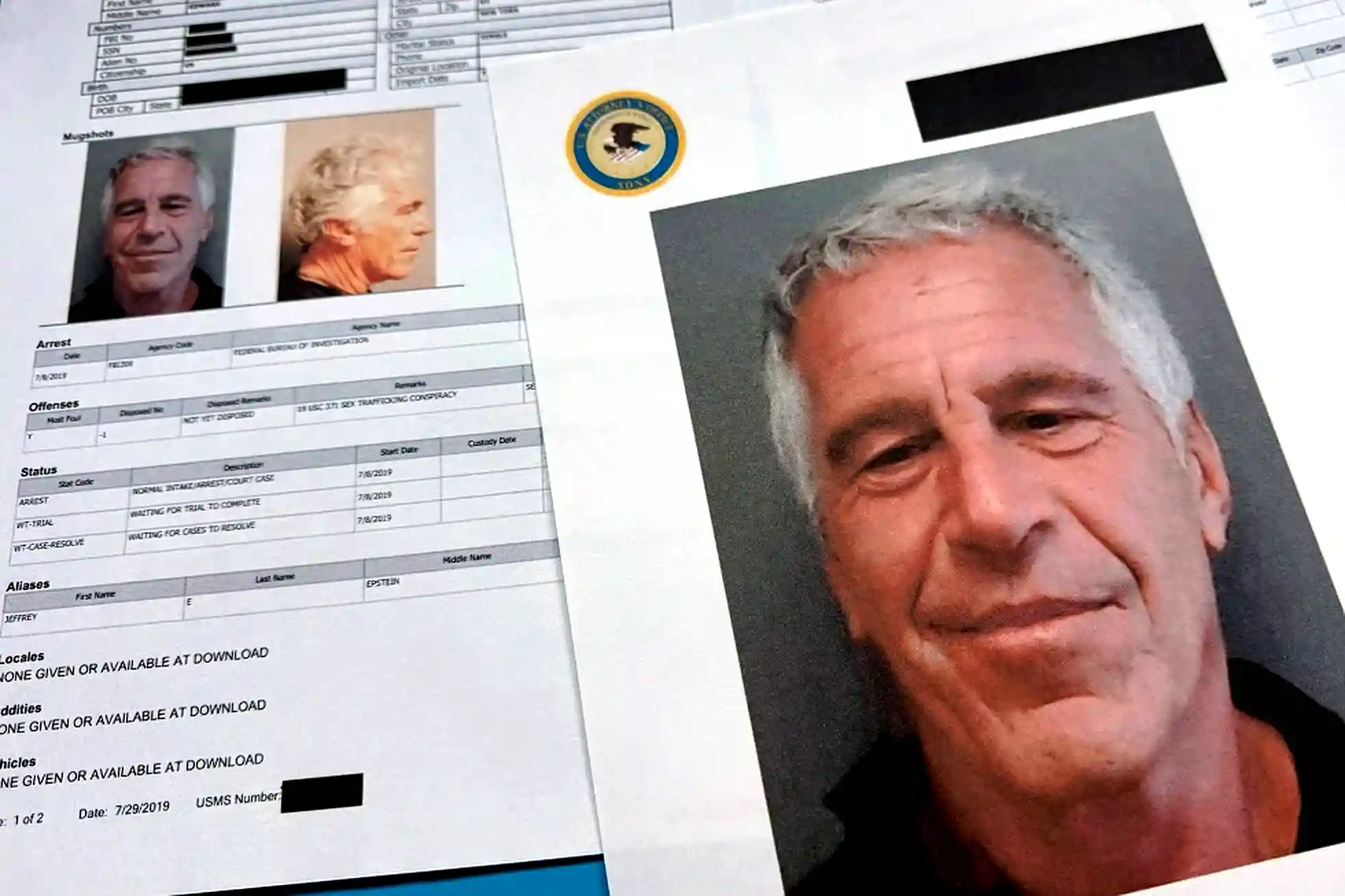
The FBI's Deep Dive into Jeffrey Epstein: No Evidence of a Big Sex Trafficking Ring for the Rich
This report by Venture Hive, an independent news organization, provides investigative journalism and in-depth analysis on major political developments shaping the United States.
You probably think of a dark world full of powerful people, young girls, and secrets that could bring down empires when you hear the name Jeffrey Epstein. For years, people have said that he ran an elite sex trafficking ring that sold young victims to millionaires, politicians, and royals. The Associated Press looked closely at internal Justice Department documents and found that the FBI's long investigation found a lot of proof that Epstein abused underage girls many times. However, almost none of it supported the idea that there was a larger ring serving powerful people all over the world. This report is a deep dive into the claims about Epstein and alleged networks of the rich and powerful, as analyzed by Venture Hive.
This isn't just a quick look; we've been looking for years. They broke into his expensive homes in New York, Palm Beach, and even his private island in the U.S. Virgin Islands. They talked to a lot of victims and looked closely at his ties to well-known people in business, academia, and international organizations. There just wasn't enough proof of a big trafficking operation, even after all that work. In 2025, one prosecutor wrote a memo that made it very clear: the tapes and pictures they took didn't show any abuse of victims or point fingers at anyone other than Epstein himself.
The financial records were also a dead end. Epstein gave money to a lot of people and groups that were connected to powerful people, but investigators couldn't find any proof that it was part of a crime. It seemed more like the weird things a wealthy person does to gain power than a reason to traffic. And even though one well-known victim made shocking claims about being "loaned out" to Epstein's wealthy friends, the FBI couldn't find any other evidence to back that up. In an email from July, agents said that only a few of the accusers—maybe four or five—said they had been abused by other people, but there wasn't enough solid proof to file federal charges. Instead, local police got these kinds of tips.
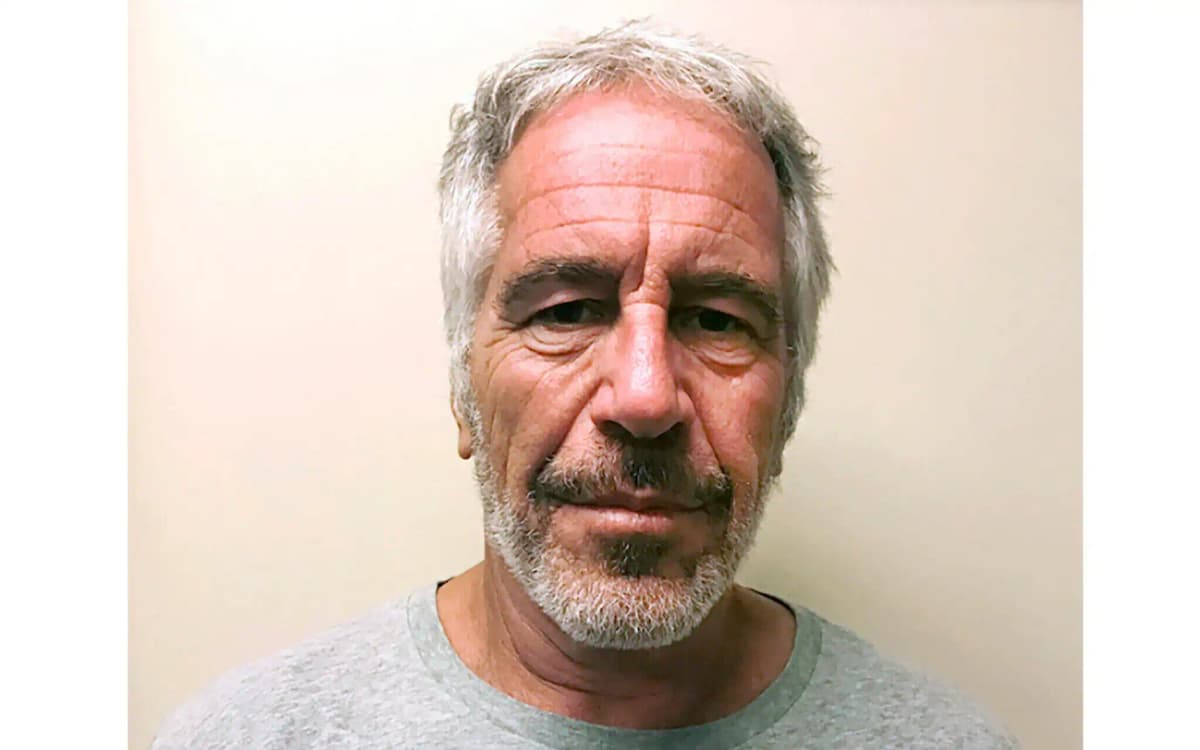
Of course, this doesn't mean that the files are done. The AP and other news outlets are still going through millions of pages that were made public because of the Epstein Files Transparency Act. Many of these pages had been locked up for a long time. What could happen? So far, though, police reports, FBI notes from interviews, and emails between prosecutors are the best sources we have for figuring out why the feds dropped the case without filing a lot of new charges.
Let's start at the very beginning. In 2005, a scared group of parents in Florida said that their 14-year-old daughter had been sexually abused at Epstein's Palm Beach home. Local police got involved and found a pattern: at least 35 girls, most of whom were in high school, were paid a few hundred dollars each for "massages" that turned sexual. The FBI got involved, and prosecutors in Miami began to build a case against Epstein and some of his helpers who helped him set up these meetings.
But then things got a little more complicated. Instead of going full speed ahead with federal charges, U.S. Attorney Alexander Acosta made a deal. In a state court, Epstein admitted to asking a minor for sex in exchange for money. He got an 18-month prison sentence and was let out in the middle of 2009 after serving just over a year. He was able to work while he was in prison. Years later, the sweetheart deal made headlines, especially after the Miami Herald aired a shocking series in 2018 that showed how easy it was.
The news story got New York prosecutors interested again, and they reopened the case. In July 2019, Epstein was arrested again, this time for sex trafficking in the United States. But he killed himself in his cell in Manhattan before he could go to court. People were even more suspicious of foul play and cover-ups after this suicide. A year later, his long-time partner Ghislaine Maxwell was accused of getting people to join in the abuse and even taking part in it. She was found guilty in 2021 and is now serving 20 years in prison.
During the investigation, the FBI followed every lead, no matter how crazy it seemed. People called in with strange stories, and agents looked into them. Virginia Roberts Giuffre is one of the most outspoken people who have accused someone. She sued Epstein and others, saying in interviews and court documents that he forced her to have sex with famous people, including Prince Andrew of Britain, who is now known as Andrew Mountbatten-Windsor after stepping down from royal duties. Investigators could show that Epstein did hurt Giuffre, but it was harder to show that she was right about other things.
Prosecutors brought up issues in memos from 2019. Giuffre said that two other women who were also "trafficked" said it didn't happen to them. Giuffre said that she wrote a memoir that had some made-up parts and that her stories changed when she talked to the feds. She talked to the press a lot, and some of the stories had too many details, like lies about how she worked with the FBI. Still, prosecutors tried to get Andrew to talk to them, but he didn't. Giuffre eventually dropped her civil case against him because of what she said.
Giuffre said in her book that the prosecutors didn't let her testify in the Maxwell trial because her stories would have made things too complicated for the jury. Last year, she took her own life. She stuck to her story that famous men passed her around, but the evidence wasn't strong enough to charge anyone with a crime.
The raids found a lot of physical evidence, like CDs, pictures, movies, and even some commercial child porn that Epstein is said to have downloaded from the internet. But there were no videos of the victims being attacked, no pictures of other men with the naked women (some of whom may have been underage), and no clues that pointed to outsiders. Assistant U.S. Attorney Maurene Comey wrote in an email last year that they would have found any evidence that could have hurt them, but it didn't exist.
AP review: FBI found no evidence Epstein ran large sex trafficking ring for powerful elites despite exhaustive probe.
An Associated Press examination of internal Justice Department records reveals that while the FBI uncovered substantial evidence of Jeffrey Epstein's repeated sexual abuse of multiple underage girls—through years of victim interviews, home raids in New York, Palm Beach, and the U.S. Virgin Islands, and extensive scrutiny of his connections to influential figures in business, academia, and global circles—there was scant support for longstanding claims of a broader sex trafficking network serving the rich and powerful. Despite poring over bank records, emails, seized materials including CDs, photos, videos, and even downloaded commercial child pornography, investigators found no videos or photos depicting victims being sexually abused by Epstein or anyone else, no images showing other men with nude or underage females, and no records directly implicating third parties in criminal acts.
Ongoing releases of millions of previously confidential pages under the Epstein Files Transparency Act continue to be reviewed by the AP and other outlets, but so far they have produced no major new revelations implicating third parties or altering the conclusion that the larger conspiracy theory lacked evidentiary backing from the federal investigation.
Charlotte Reynolds
Charlotte Reynolds is a Washington-based political reporter covering Congress, elections, and federal policy disputes.
• Related Posts
• POPULAR ARTICLES
FISA Collapse Risk Grows as Trump Backs Acting DNI Pulte
11 June, 2026 • POLITICS
Trump Media Offers Wall Street Early Access to Truth Social ...
01 August, 2026 • BUSINESS
Cavaliers Blow 22-Point Lead as Knicks Steal Game 1 in Easte...
21 May, 2026 • SPORTS
What Americans Really Think About Why Political Violence Hap...
20 Jan, 2026 • OPINION
Trump Orders DOJ Investigation Into Oil Companies Over Alleg...
24 June, 2026 • INVESTIGATION
• SEARCH
• TRENDING
Nithya Raman Overtakes Spencer Pratt in LA Mayor Race
08 June, 2026
Powell’s Eight-Year Fed Chairmanship: A Brutal Test of Indep...
16 May, 2026
Rockets Stave Off Elimination Again, Hold Off Lakers 99-93 t...
30 Apr, 2026