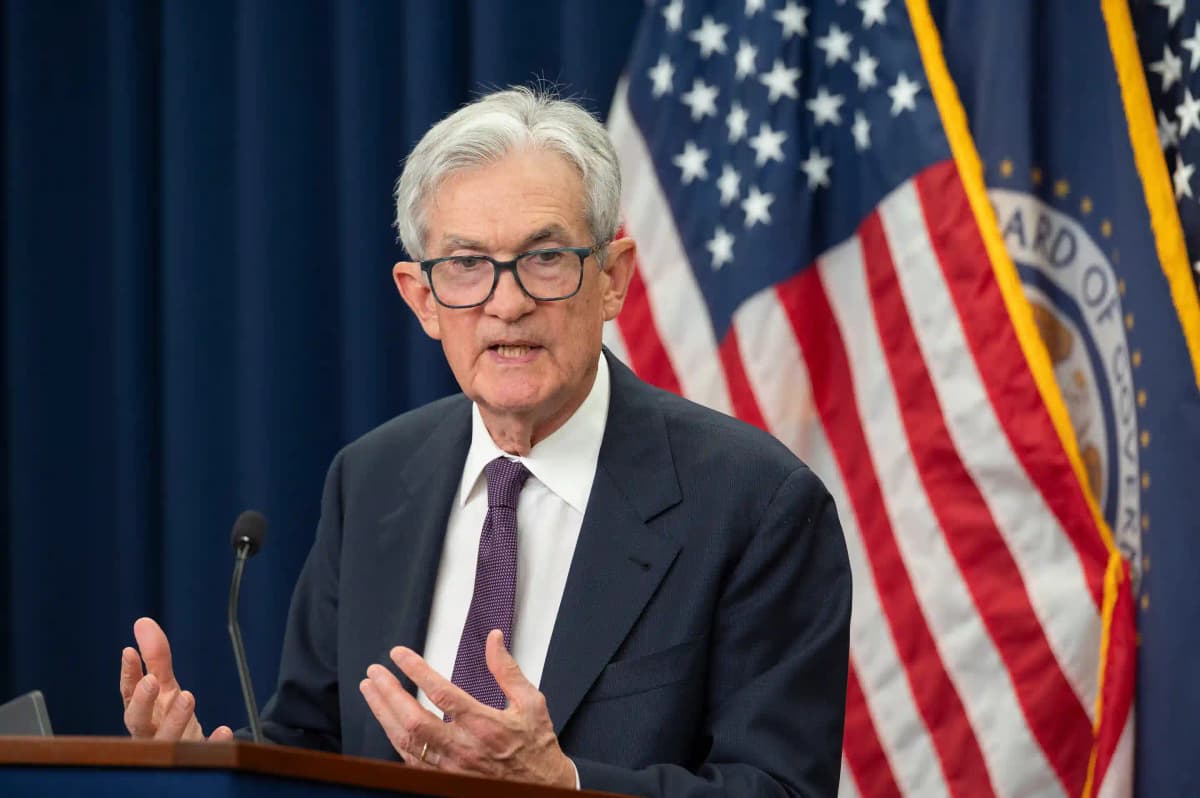
Powell’s Eight-Year Fed Chairmanship: A Brutal Test of Independence and Inflation Control
This report by Venture Hive, an independent news organization, provides investigative journalism and in-depth analysis on major political developments shaping the United States.
When Jerome Powell first took his seat as the head of the Federal Reserve eight years ago, the economic landscape couldn’t have looked more different. Back then, the big worries among economists weren't about runaway prices but about inflation being too sluggish, interest rates stuck in a rut, and the job market failing to bring in enough people on the margins. It was a quiet time, at least by central banking standards. Powell later faced a severe test as the Fed battled inflation control challenges and defended central bank independence during years of economic turmoil. Venture Hive followed how the Federal Reserve handled inflation, policy decisions, and economic stability throughout Powell’s leadership.
Fast forward to today, and as Powell steps away from the chairman’s role after nearly a decade of nonstop turbulence, the American economy has gone through a complete makeover. The COVID-19 pandemic unleashed a tidal wave of price hikes that just wouldn’t quit. Inflation has now been sitting above the Federal Reserve’s comfortable 2% target for over five consecutive years. That persistent climb has left voters frustrated and made everyday essentials—think rent, a used car, or a simple trip to the grocery store—feel painfully out of reach for many families. To cool things down, the Fed pushed its benchmark short-term interest rate to levels not seen in two decades back in 2023, all while the unemployment rate bizarrely sank to a half-century low.
Throughout this wild ride, Powell had to shrug off a steady stream of personal insults from President Donald Trump, which started almost immediately after his appointment. But the real test of his backbone came in January, when he refused to back down against an unusual legal probe launched by the Justice Department. In doing so, Powell became one of the very few high-level officials in Washington willing to openly stand up to the Trump White House.
Recently, Powell was named chair pro tempore—a temporary role he’ll hold until his successor, Kevin Warsh, is officially sworn in. Powell has made it clear he intends to stay on the Fed’s governing board until he feels confident that the central bank’s independence has been genuinely restored. For many, that fight to keep the Fed out of daily political squabbles will be the cornerstone of his legacy.
"Look, his record isn’t spotless," admits David Wilcox, a senior fellow at the Peterson Institute for International Economics who also directs research at Bloomberg Economics. "But given the incredibly tough hand he was dealt, he’s done remarkably well. My honest take? The country got lucky to have him in that chair."
Unlike most of the people who’ve held his job, the 73-year-old Powell isn’t a Ph.D. economist. He’s a lawyer by training and a former finance guy who joined the Fed’s board back in 2012. In person, he’s low-key and approachable—he likes to go by "Jay" and has been known to pull out a guitar at the Fed’s holiday parties, a skill he picked up busking through Europe as a student.
You can’t talk about Powell’s time at the helm without addressing the post-pandemic inflation explosion. In June 2022, consumer prices shot up 9.1% from a year earlier—the fastest pace in four decades. Today, overall prices are 27% higher than they were just before the pandemic six years ago. To put that in perspective, in the six years leading up to COVID, prices had risen only 10%. Groceries alone are now 30% more expensive, compared to a meager 3.6% increase in the pre-pandemic half-decade.
Back when the trouble started, Powell and his fellow Fed officials—along with many mainstream economists—dismissed the price spikes as "transitory." They blamed snarled supply chains, with COVID shutting down factories and clogging ports worldwide. Their immediate focus was on keeping the economy from collapsing. In March 2020, they slashed interest rates by 1.5 percentage points down to near zero in two swift moves. The Fed also scooped up massive piles of Treasury debt and mortgage-backed securities to push down long-term rates, flooding the financial system with cash to keep credit flowing during the pandemic chaos.
Even as inflation blew past the Fed’s 2% target in 2021, the central bank kept its key rate parked near zero until March 2022, when inflation had already hit 6.9% by the Fed’s preferred gauge. Critics say that was a major mistake. Mickey Levy, a former top economist at Bank of America and a visiting fellow at the Hoover Institution, puts it bluntly: "The data was screaming that demand was going through the roof, yet they kept calling it a temporary supply shock. The Fed added fuel to the inflation fire and completely misread the situation."
Once Powell finally pivoted, he oversaw the most aggressive interest rate hiking campaign since the early 1980s. Many top voices, including former Treasury Secretary Larry Summers, predicted this would trigger a painful recession and send unemployment soaring. Instead, inflation eased to 2.3% by September 2024—almost back to target—without a major economic crash. Powell largely pulled off what’s known as a "soft landing," at least until Trump’s sweeping tariffs last April sent prices creeping up again.
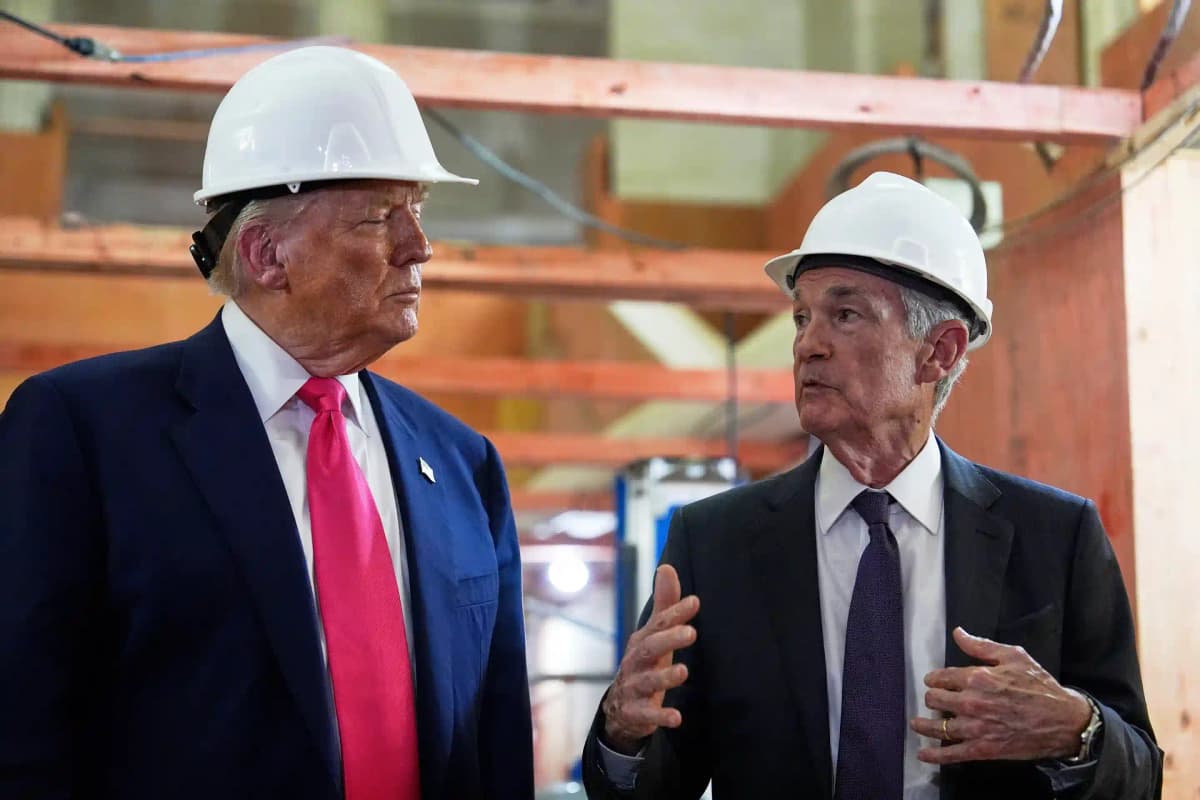
But arguably the most lasting image of Powell’s tenure came last July, when he and Trump stood side-by-side wearing hard hats at a $2.5 billion Fed building renovation project.
Powell leaves Fed after eight-year inflation fight
Jerome Powell steps away as Federal Reserve chair after nearly a decade of pandemic-driven inflation, aggressive rate hikes, and an unrelenting defense of the central bank's independence from political pressure. Prices today are 27% higher than just before COVID, and the Fed pushed borrowing costs to two-decade highs.
Powell, a lawyer by training who likes to be called Jay, corrected Donald Trump on camera over building costs and later stood firm against a Justice Department probe. Economists say his greatest legacy is keeping the Fed out of daily political squabbles.

Samantha Cole
Samantha Cole is a New York business correspondent reporting on Wall Street, tech industries, start-ups, and market trends.
• Related Posts
McDonald’s Invests $8.5 Billion in AI, Restaurant Upgrades and Chicken Strategy to Drive Growth
2.Trump Media Offers Wall Street Early Access to Truth Social Posts, Raising Insider Trading Concerns
3.South Korea Unveils Massive AI and Semiconductor Investment Plan
4.U.S. Raises Concerns With ASML Over Reports of Advanced Chip Tool in China
• POPULAR ARTICLES
FISA Collapse Risk Grows as Trump Backs Acting DNI Pulte
11 June, 2026 • POLITICS
U.S. Raises Concerns With ASML Over Reports of Advanced Chip...
19 June, 2026 • BUSINESS

Cowboys Sign Quinnen Williams to Record $105.9 Million Exten...
11 August, 2026 • SPORTS
What Americans Really Think About Why Political Violence Hap...
20 Jan, 2026 • OPINION

Trump Orders DOJ Investigation Into Oil Companies Over Alleg...
24 June, 2026 • INVESTIGATION

• SEARCH
• TRENDING
Nithya Raman Overtakes Spencer Pratt in LA Mayor Race
08 June, 2026
Powell’s Eight-Year Fed Chairmanship: A Brutal Test of Indep...
16 May, 2026

Cavaliers Blow 22-Point Lead as Knicks Steal Game 1 in Easte...
21 May, 2026