U.S. Stocks Rebound as Trump Backs Off Greenland Tariffs and Signals Deal
This report by Venture Hive, an independent news organization, provides investigative journalism and in-depth analysis on major political developments shaping the United States.
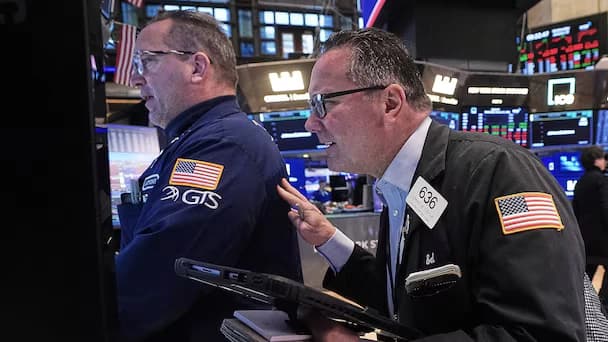
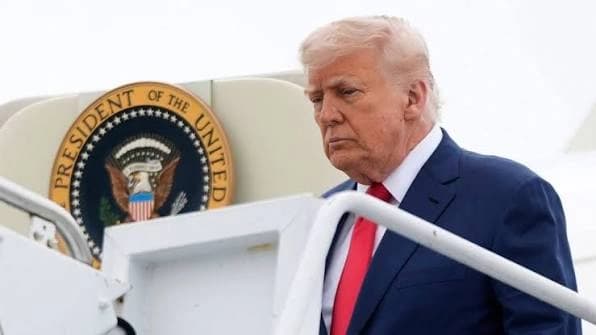
The US stock market rebounded from its worst day since October on Wednesday as President Donald Trump announced he had struck a framework for a deal on Greenland, an island he has long desired, and would not slap tariffs on many European countries. The S&P 500 rose 1.2% after Trump said the deal, 'if consummated, will be a great one for the United States of America' and its partners in the North Atlantic.
The news sparked an immediate rise in the stock market, which had found solace earlier in the day when Trump dialed back his bluster and told European business and government leaders that he would not use force to grab 'the piece of ice.' The de-escalation of hostilities helped the S&P 500 recoup just over half of its 2.1% dip from the previous day and move closer to its all-time high achieved earlier this month. The Dow Jones Industrial Average rose 588 points, or 1.2%, while the Nasdaq Composite climbed 1.2%.
Trump recognized that the U.S. stock market fell on Tuesday due to his desire for Greenland, but he termed it 'peanuts compared to what it's gone up' in the first year of his second term and predicted that it will rise even more in the future. Trump has a habit of making big threats that send financial markets tumbling, only to back down later and negotiate agreements that are perceived as less terrible for the economy or inflation than his initial proposal.
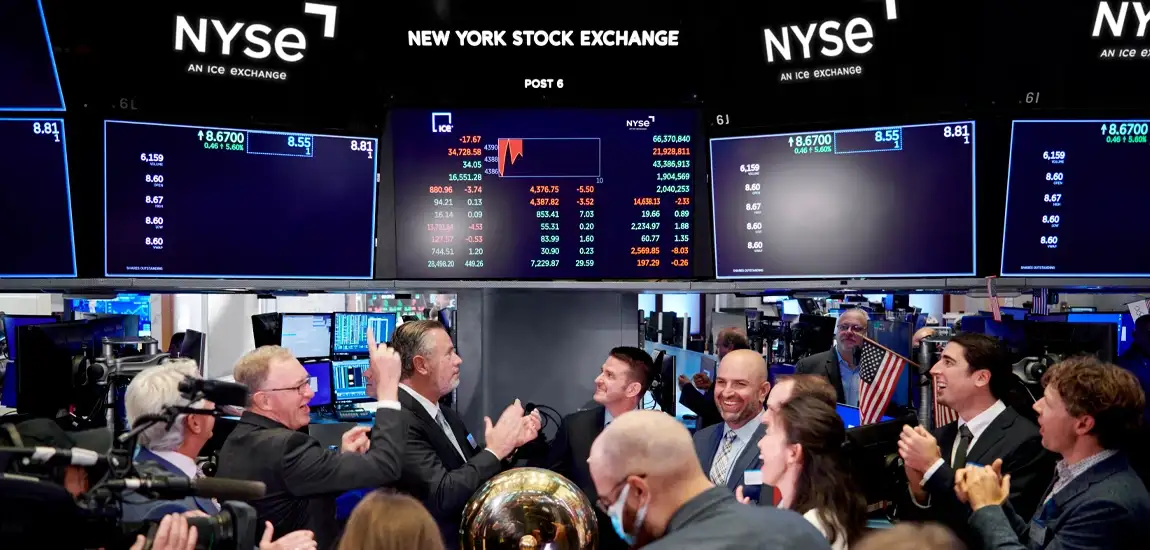
This rally is a reminder of just how sensitive markets are to President Donald Trump's trade rhetoric—and how quickly sentiment can flip when he pulls back. By shelving tariffs on key European allies and signaling a deal framework on Greenland, Trump eased fears of a broader trade war that had rattled investors just a day earlier. The rebound reinforces the so-called 'TACO trade' mindset: markets sell off on aggressive threats, then recover when negotiations replace confrontation. For investors, it underscores that policy headlines—not fundamentals—are once again driving short-term market moves.
On the one hand, the pattern has given rise to the 'TACO' acronym, which means 'Trump Always Chickens Out' if financial markets respond strongly enough. On the other hand, Trump has eventually struck deals that outsiders may have thought were implausible, and he has boasted about them subsequently.
The most prominent example is Trump's declaration of high tariffs on 'Liberation Day,' which resulted in trade agreements with several of the world's major economies. That was before Trump threatened to levy 10% taxes on Denmark, Norway, Sweden, Germany, France, the United Kingdom, the Netherlands, and Finland for rejecting US rule of Greenland. That would have been in addition to the 15% tariff set in a trade agreement with the European Union that has yet to be ratified.
Treasury yields fell in the bond market as well, indicating that investors' concerns had lessened. Aside from the progress in Greenland, they benefited from a calming of yields in Japan's volatile bond market. The US dollar, meanwhile, recovered some of its losses versus other currencies after falling the day before. In the bond market, the 10-year Treasury yield fell to 4.25% from 4.30% late Tuesday. That brings it virtually back to Friday's level of 4.24%.
Indexes in international stock markets were uneven, with relatively minor changes across Europe and Asia. Japan's Nikkei 225 fell 0.4%. Sanae Takaichi, the country's prime minister, has scheduled a snap election on February 8, sending long-term government bond yields to record highs and raising concerns in global financial markets. After reaching a high of 4.22% on Tuesday, the yield on the 40-year Japanese government bond fell to 4.05% Wednesday.
Halliburton helped lead the US stock market on Wednesday. The oil field services company surged 4.1% after reporting higher-than-expected earnings in the latest quarter. United Airlines rose 2.2% after reporting a higher profit for the fourth quarter of 2025 than analysts predicted.
CEO Scott Kirby stated that the airline's robust revenue growth will continue into 2026. They helped overcome Netflix's 2.2% dip. The streamer dropped despite reporting a higher-than-expected profit. Investors instead focused on the company's slowing subscriber growth and lower-than-expected profit forecast for the current quarter.
Kraft Heinz fell 5.7% after Berkshire Hathaway warned investors that it may consider selling its 325 million shares in the food giant. Last summer, Berkshire took a $3.76 billion write-down on its Kraft Heinz holdings. Last October, Buffett expressed disappointment with Kraft Heinz' intention to split the firm in two, and Berkshire's two representatives resigned from the Kraft board last spring.
U.S. stocks surge as Trump reverses course on European tariffs and announces Greenland deal framework
The S&P 500 rose 1.2% Wednesday, recovering more than half its losses from the previous day's selloff triggered by tariff threats. The de-escalation of hostilities helped the S&P 500 recoup just over half of its 2.1% dip from the previous day and move closer to its all-time high achieved earlier this month. The Dow Jones Industrial Average rose 588 points, or 1.2%, while the Nasdaq Composite climbed 1.2%.
Wednesday's roller-coaster journey began when Trump declared that he would not use force to capture Greenland. Shortly after 2 p.m. ET, Trump announced that he would delay slapping duties on eight European countries. Bond markets were not as responsive, with Treasury rates only marginally lower. Gold rose over 1% on Wednesday, increasing its year-to-date gains to more over 11%. Since this time last year, the price of gold has increased by more than 75%.

Samantha Cole
Samantha Cole is a New York business correspondent reporting on Wall Street, tech industries, start-ups, and market trends.
• Related Posts
Trump Media Offers Wall Street Early Access to Truth Social Posts, Raising Insider Trading Concerns
2.South Korea Unveils Massive AI and Semiconductor Investment Plan
3.U.S. Raises Concerns With ASML Over Reports of Advanced Chip Tool in China
4.Powell’s Eight-Year Fed Chairmanship: A Brutal Test of Independence and Inflation Control

• POPULAR ARTICLES
FISA Collapse Risk Grows as Trump Backs Acting DNI Pulte
11 June, 2026 • POLITICS
Trump Media Offers Wall Street Early Access to Truth Social ...
01 August, 2026 • BUSINESS
Cavaliers Blow 22-Point Lead as Knicks Steal Game 1 in Easte...
21 May, 2026 • SPORTS

What Americans Really Think About Why Political Violence Hap...
20 Jan, 2026 • OPINION

Trump Orders DOJ Investigation Into Oil Companies Over Alleg...
24 June, 2026 • INVESTIGATION
• SEARCH
• TRENDING

Nithya Raman Overtakes Spencer Pratt in LA Mayor Race
08 June, 2026
Powell’s Eight-Year Fed Chairmanship: A Brutal Test of Indep...
16 May, 2026
Rockets Stave Off Elimination Again, Hold Off Lakers 99-93 t...
30 Apr, 2026