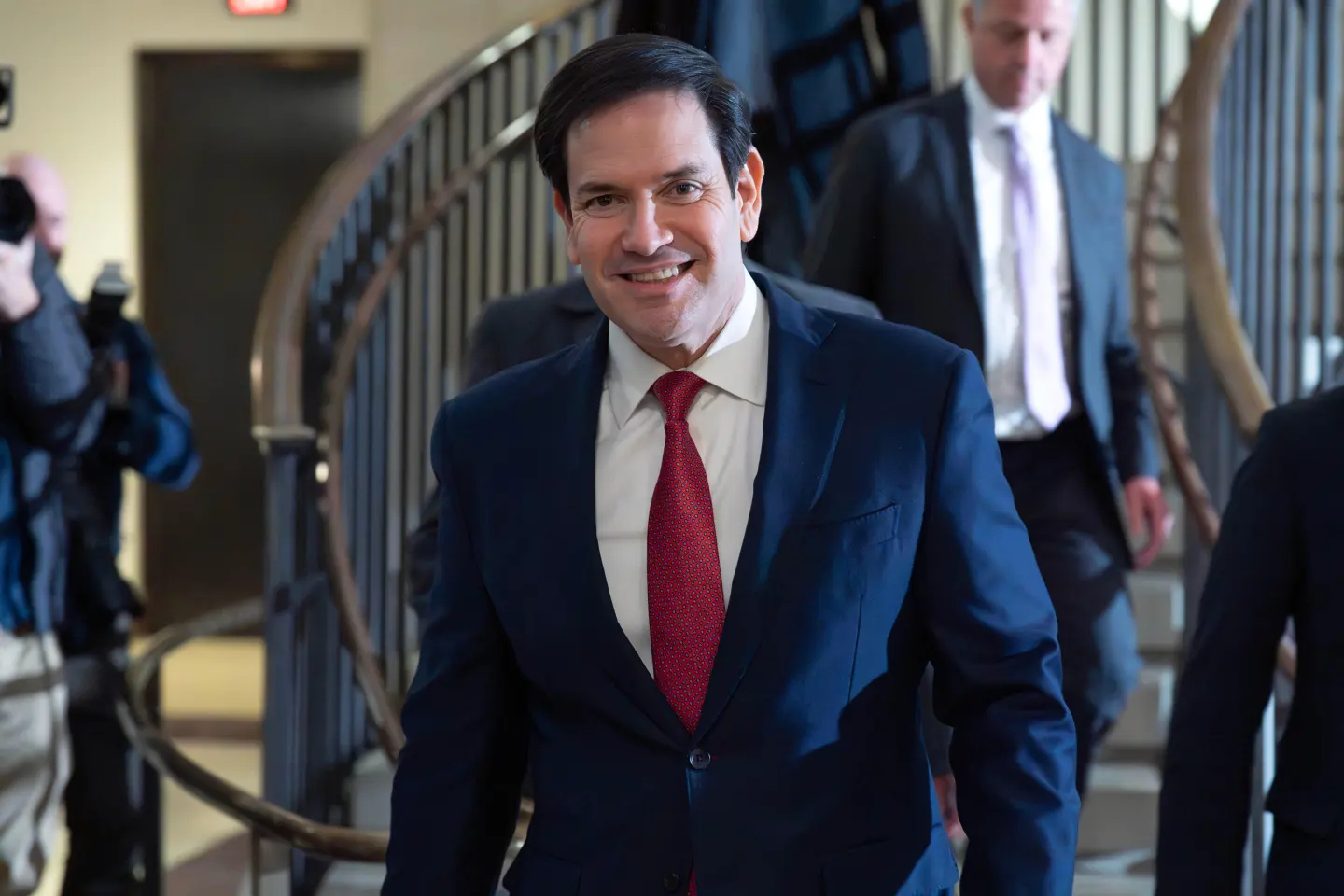
Rubio and Hegseth Brief Congress on Venezuela Intervention as Questions Grow
This report by Venture Hive, an independent news organization, provides investigative journalism and in-depth analysis on major political developments shaping the United States.
As tensions escalate between Washington's top officials, notify Congress about the intervention in Venezuela.
Late on Monday night, Secretary of State Marco Rubio and other high-ranking members of the administration met with congressional leaders in secret to talk about the recent U.S. military actions in Venezuela. People are becoming more worried that President Donald Trump's bold move to get rid of Nicolás Maduro could mean a shift toward a more aggressive, expansionist foreign policy that doesn't have a clear plan for what happens next in the troubled South American country and doesn't have the usual congressional oversight.
Most Republican legislators agreed with Trump's decision to take action against Maduro's administration during the briefing, which took place in guarded parts of the Capitol. They believe that stopping things like drug trafficking that put Americans' safety at risk is important. Democrats, on the other hand, came out of the meeting with a lot of questions that weren't answered. This is especially true because U.S. naval forces are still off the coast of Venezuela and Trump is telling American companies to go back into the country's faltering oil sector, which has been harmed by years of terrible management and sanctions.
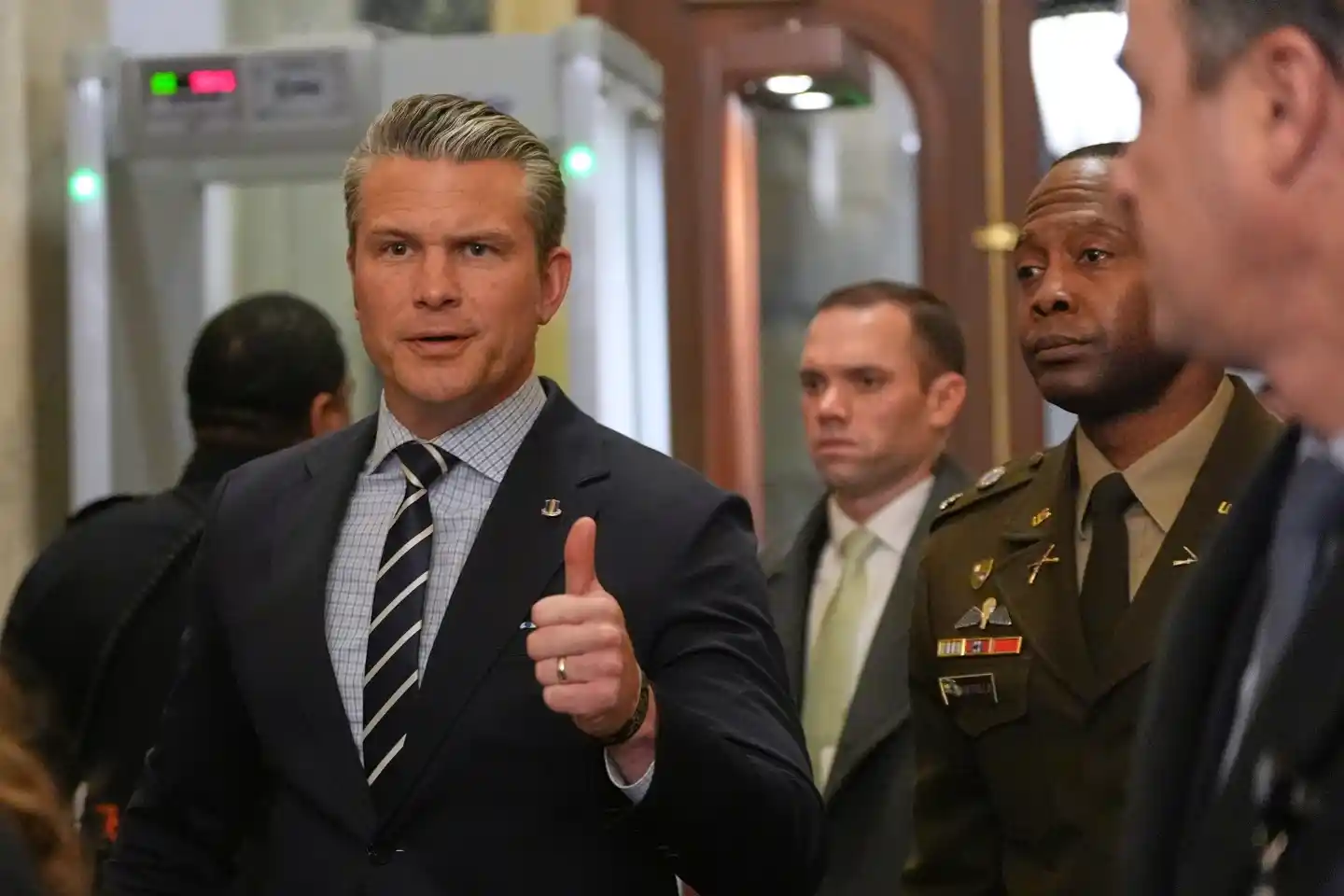
The Senate will vote on a measure this week that would bar the U.S. military from getting engaged in Venezuela again without Congress's authorization. It's a clear sign that things are growing tight on Capitol Hill. Lawmakers from both parties are trying to figure out what this operation means. After the meeting, Mike Johnson, the Republican Speaker of the House of Louisiana, tried to downplay the hazards. He stated, "This isn't about getting rid of the whole government." "It's about asking for change and taking responsibility." He talked about the horrific U.S. boat strikes that started the campaign and killed more than 115 people. These actions were aimed to curb drug smuggling by people close to Maduro. Johnson also declared that the U.S. would not go to war but would instead employ economic pressure. He remarked, "We have strong persuasion tools—taking their oil exports should force a quick change in government." He was hopeful that the issue will be fixed immediately.
A lot of people on the other side of the aisle don't know. Senator Jeanne Shaheen from New Hampshire, the senior Democrat on the Senate Foreign Relations Committee, didn't seem convinced after the briefing. "We've got a lot more ground to cover," she remarked, which showed that the administration's case wasn't very strong. Gregory Meeks, a New York Representative who is also on the House Foreign Affairs Committee, talked about how much it would cost. "How much does this cost?" He said, "How much will this cost the people of the United States?" This demonstrated that other Democrats were similarly apprehensive about how much it would cost to start another war.
A lot of people are much upset now that they know Congress wasn't briefed anything about the operation until it was already going on. This isn't just a small error; it's a huge deviation from the rules, especially because the Constitution stipulates that Congress can declare war. After everything settled down, MPs learned about the strikes, which involved attacking key areas in Caracas and taking Maduro out. Because of this delay, people are discussing about how much the government should be open and how far the president may go in foreign affairs.
During the two-hour talk, administration officials were asked hard questions on a lot of things, such whether or not the US should send ground troops to Venezuela and the complicated power battles going on in the country's leadership vacuum. There were people there to answer questions, including Defense Secretary Pete Hegseth, Joint Chiefs Chairman Air Force General Dan Caine, and Attorney General Pam Bondi. Bondi, in particular, suggested that the drug trafficking charges against Maduro were a motivation for the move. The "Gang of Eight" was a tiny group made up of leaders from both parties, chairmen of intelligence committees, and prominent members from national security panels. This shows how secret the negotiations were.
Everyone's reactions following the meeting proved that they were all unsure. Mark Warner, the head of the Intelligence Committee and a Democrat, said he still doesn't know who is truly in charge in Caracas. He shook his head and told the press, "I'd love to say we have clarity, but I can't." Some Republicans even acknowledged they didn't like how things were going. Senators Richard Durbin of Illinois and Chuck Grassley of Iowa, who are in charge of the Judiciary Committee, said they should have a say because they were in charge of the Justice Department when Bondi was in charge.
Earlier that day, Senate Democratic Leader Chuck Schumer had stated on the Senate floor that Venezuela might be the first step in Trump's ambitions for foreign policy. He claimed that the president's recent comments regarding Colombia, Cuba, and even Greenland proved that he was getting more interested. Schumer stated, "Americans don't want another cycle of wars that never end." People thought of the protracted conflicts in Iraq and Afghanistan that left wounds on the country's mind. Schumer remarked that the briefing was thorough but not good enough when it was over. "Yes, it was long and detailed, but it brought up a lot more problems than it solved," he added. This is what a lot of people in his party thought. This gap isn't just between Democrats and Republicans; it's also a sign of issues in the Republican Party, especially among people who agree with Trump's "America First" message. Some MAGA supporters like Trump's tough position on Maduro, while others are unhappy that he is getting too engaged in global matters, which he used to worry about throughout his campaigns.
It's still not clear what will happen next in Venezuela. Many people are curious about when, or if, free elections will take place and who will be in charge of the country in the meanwhile. The Trump administration has unexpectedly become close to Delcy Rodríguez, who used to be Maduro's vice president and is a major supporter of his. She took over as leader after Maduro was forced out. She has claimed she is willing to "work together" with the U.S., but this has made her typical enemies, such María Corina Machado, less essential. Trump says that Machado doesn't have the backing or power to be president, even though she just won the Nobel Peace Prize for her fight to bring democracy to Venezuela. This snub has been viewed by a lot of people. Senator Rick Scott from Florida, who really likes Trump, will talk to Machado soon. He said kind things about her because she did so well in the last elections. Scott stated, "She has a lot of support from the last vote." "I think she will be president one day." The country won't be completely democratic tomorrow since there are still horrible things going on. But there is an election coming up, and she will win.
But not every Republican agrees. Senator Rand Paul from Kentucky has been quite vocal against the boat strikes. He argues that the whole affair is a slippery slope. "There are maybe a dozen or more leaders around the world who are breaking international laws or human rights standards," Paul added. "But we've never just blasted their capital and murdered everyone. This is against the law and a bad thing to do. You may only say "start a war." Paul's worries are part of a bigger argument against U.S. interventionism. The Monroe Doctrine and the Cold War proxy battles are only two of the many reasons why the US has been involved in Latin America in the past. Some people think that Trump is too aggressive and quick in his actions.
Congress briefed on U.S. Venezuela operation as Democrats demand answers and Republicans show support.
Secretary of State Marco Rubio and Defense Secretary Pete Hegseth led a classified briefing for congressional leaders on the military action that removed Nicolás Maduro, with Republicans backing the move and Democrats raising concerns over costs and oversight.
Lawmakers questioned the administration on future plans, including the role of interim leader Delcy Rodríguez and opposition figure María Corina Machado, amid an upcoming Senate vote on war powers.
Charlotte Reynolds
Charlotte Reynolds is a Washington-based political reporter covering Congress, elections, and federal policy disputes.
• Related Posts
• POPULAR ARTICLES
FISA Collapse Risk Grows as Trump Backs Acting DNI Pulte
11 June, 2026 • POLITICS
U.S. Raises Concerns With ASML Over Reports of Advanced Chip...
19 June, 2026 • BUSINESS

Cowboys Sign Quinnen Williams to Record $105.9 Million Exten...
11 August, 2026 • SPORTS
What Americans Really Think About Why Political Violence Hap...
20 Jan, 2026 • OPINION
Trump Orders DOJ Investigation Into Oil Companies Over Alleg...
24 June, 2026 • INVESTIGATION
• SEARCH
• TRENDING
Nithya Raman Overtakes Spencer Pratt in LA Mayor Race
08 June, 2026
Powell’s Eight-Year Fed Chairmanship: A Brutal Test of Indep...
16 May, 2026
Cavaliers Blow 22-Point Lead as Knicks Steal Game 1 in Easte...
21 May, 2026