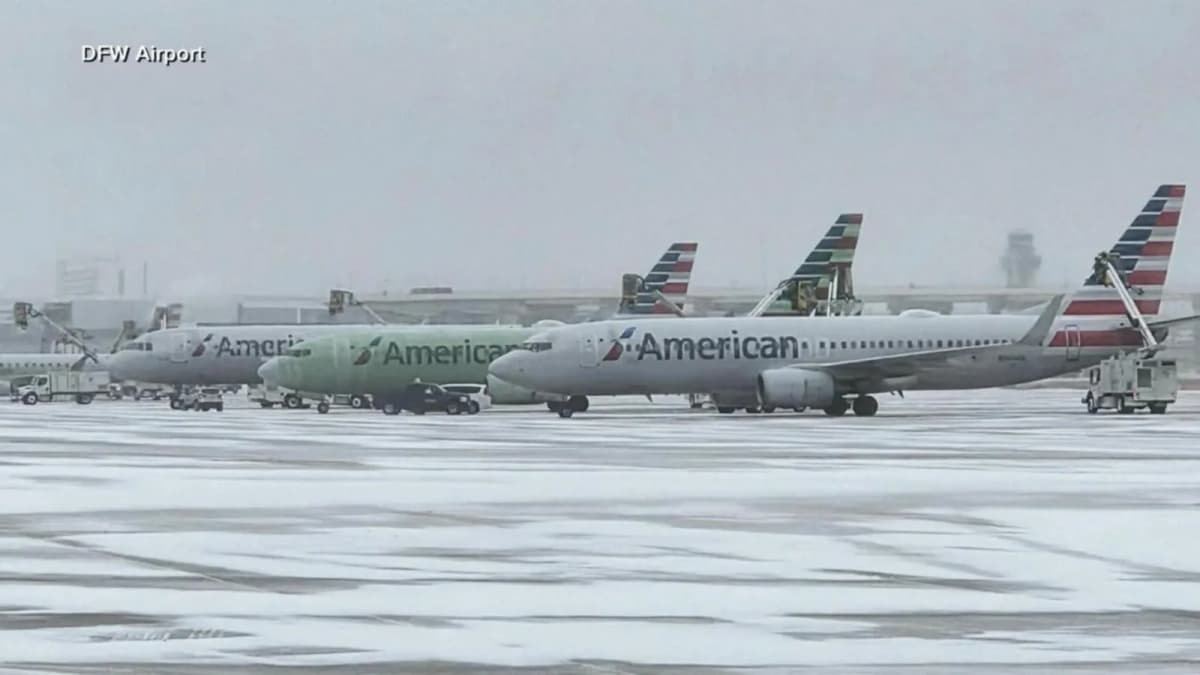
How a Huge Winter Storm Brought U.S. Skies to a Standstill
This report by Venture Hive, an independent news organization, provides investigative journalism and in-depth analysis on major political developments shaping the United States.
It's a normal winter weekend in the US, but Mother Nature had other ideas. A huge winter storm swept over the country on Sunday, making airports look like ghost towns and leaving travelers stuck in a flurry of cancellations and delays. This wasn't just a light coating of snow; it was a full-blown beast of a blizzard that affected more than half the population and made air travel a mess like we've never seen since the height of the pandemic. Let's talk about what happened, why it was so horrible, and what you can do if you're stuck in the mess.
The storm began to build in the southern Rocky Mountains and didn't stop as it moved east. The National Weather Service was sounding the alarm on Saturday night, saying that almost 180 million people, from the heartland to the busy Northeast, were in its path. We're talking about a lot of snow, sleet, and freezing rain that may make highways and runways very dangerous. The South was the first to get hammered, with icy conditions that aren't frequent there. Then the storm turned north and hit locations like Washington, D.C., New York, and Boston. Some areas were expected to get 1 to 2 feet of snow, which would be enough to bury cars and shut down whole cities. Imagine waking up to a thick blanket of white that makes it impossible to see your neighbor's house. That's what millions of people are going through right now. This explains how the massive winter storm pushed U.S. air travel to a complete standstill, turning the skies into a gridlocked system of delays and cancellations.
But the true pain occurred at the airports. FlightAware, a site that tracks flights in real time, said that more than 11,400 flights were canceled on Sunday alone. That's a huge amount, which means it's the worst day for cancellations since COVID-19 changed everything. Early on Sunday morning, Cirium's aviation experts, who work with figures like this, acknowledged that this storm broke records for how many problems it caused. Things got worse during the afternoon, especially in the Northeast where the snow was piling up the quickest.
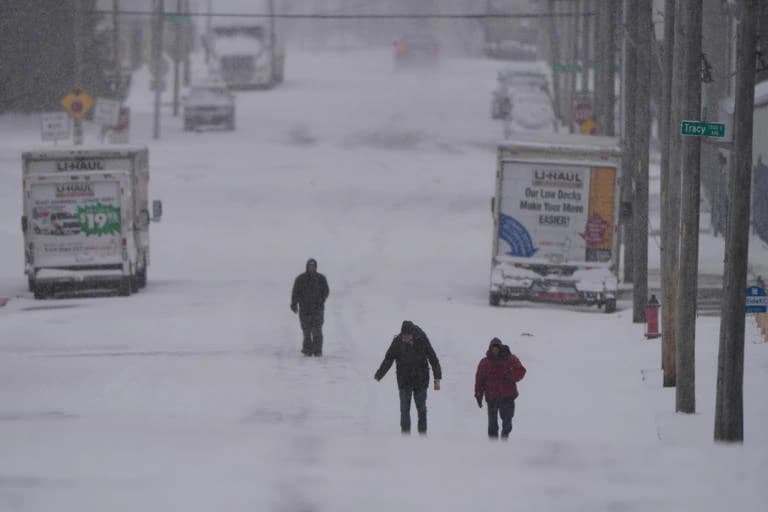
Let's look at it by airport because the anguish wasn't the same for everyone. LaGuardia Airport in New York City was struck hard; 91% of its flights, or 436 in all, were canceled. The Federal Aviation Administration even closed the site down completely until 8 p.m., so everything on the tarmac had to stay there. At John F. Kennedy International, which is also in New York, roughly 80% of flights—466 of them—were canceled. Philadelphia International wasn't far behind, with 326 flights canceled, or 94% of all flights. In Washington, D.C., Ronald Reagan Washington National Airport had to cancel all of its flights for the day, which added up to about 421 cancellations. Their website effectively declared, 'Don't even bother coming; everything is off.'
But it wasn't just the East Coast that was freezing. Major hubs all throughout the country were in shock. The storm's southern edge brought ice and sleet to Dallas-Fort Worth, a huge airport in Texas, which caused a lot of problems. Charlotte, North Carolina; Philadelphia (as indicated); and Atlanta, which has the busiest airport in the world, all witnessed a lot of cancellations. Hartsfield-Jackson Airport in Atlanta is generally a well-oiled machine that handles thousands of aircraft every day, but even it couldn't avoid the pandemonium. The storm's effects were so wide that they had a domino effect. Even if the weather was great in one place, it still caused delays in other cities.
Personal stories really show how this mistake hurt actual people. For instance, look at Allan Lengel from Detroit. He was relaxing in Fort Lauderdale, Florida, where the temperature was in the 80s. This was a paradise compared to the harsh frost back home. He was going to travel back on Delta on Monday, but the airline told him to wait until Wednesday because of the storm. Lengel, who is 71, didn't care at all. 'I can't say I'm disappointed,' he told the press. 'Honestly, I was thinking about coming back later because it was so cold.' Michigan was getting ready for snow and temperatures below zero, so extending his vacation seemed like a good idea. It's a reminder that cancellations can be annoying, but they can also be good, especially if you're trying to get away from the cold.
Now let's talk about airlines, since not all of them were affected in the same way. American Airlines had the most cancellations, with more than 1,790, which was nearly 55% of all their Sunday flights. Delta wasn't far behind, canceling more than 1,470 flights. Southwest, which is known for being efficient without frills, had to cancel more than 1,340 flights, while United had to cancel only 1,016. JetBlue, which flies a lot in the Northeast, was hit the hardest, with over 590 flights canceled, or 72% of their day. These statistics aren't just numbers; they show that thousands of people are trying to change their plans, book accommodations, or find other methods to go home.
Why does it take so long to get better? I talked to some specialists in my head, or at least that's what people like Vikrant Vaze claim. He teaches at Dartmouth and researches the logistics of commercial aviation, which is basically the behind-the-scenes wizardry that keeps planes in the air. Vaze said that it takes a while to get over something like this. Depending on the airline, it could take days, weeks, or even longer. He said, 'There are so many different airlines involved that it will depend a lot on the network structure of each airline, how badly each one has been hit, and how well the airlines can handle these huge disruptions.' If an airline has a lot of flights that go through stormy areas, it's harder to change the routes. Crews become trapped, planes end up in the wrong places, and maintenance inspections build up. A canceled connection in Chicago may ruin your day, even if you're going from sunny California to Florida.
What should you do if your flight gets canceled? Don't worry; there are things you can do to make the headache less bad. If you're already at the airport, the first thing you should do is go to the customer service desk and get in line. Those salespeople are the only people who can help you rebook. But if you're still at home or in your hotel, don't bother. Just call the airline or go to their app or website. While you're on hold (and believe me, the lines will be long), do some research on backup flights yourself. To find out what's available, use tools like Google Flights or the airline's own website.
Most airlines will let you change your flight for free later, but only if there are vacant seats. You might have to wait a bit if the next one is filled. And here's a widespread myth: can they put you on a different airline? Yes, sometimes, but they don't have to. If you're flying with a big airline like American or Delta, they might move you to a partner airline if they're in an alliance, but it's not always the case. It usually depends on the situation and how willing everyone is to work along that day.
The good news? If you decide not to go on the vacation at all, you can get your money back. It doesn't matter if the ticket was non-refundable or why the flight was canceled, like bad weather or mechanical problems. The law specifies that the airline needs to give you back all of your money, even the extras you paid for but didn't use, such luggage fees, seat upgrades, or Wi-Fi. They might try to give you a travel credit instead, which is like airline funny money that goes bad after a while. But don't back down; you can ask for cash or a credit back to your card.
Historic winter storm cancels 11,400+ flights across America, worst disruption since pandemic
A huge winter storm hit the US on Sunday, affecting more than 180 million people from the Rocky Mountains to the Northeast. More than 11,400 flights were called off. LaGuardia Airport canceled 91% of its flights, and Ronald Reagan Washington National Airport canceled all of its flights for the day. American Airlines had the most canceled flights, with 1,790 on Sunday. That was about 55% of all of their flights.
The hurricane's effects were felt all over the place, not just on the East Coast. The country's air travel system is all connected, so it set off a chain reaction. Depending on how well each airline's network is set up and how well it can handle operations, it could take days or even weeks for things to get back to normal. People whose flights are canceled are entitled to full refunds, no matter what kind of ticket they bought. This means you have to pay for Wi-Fi, better seats, and luggage. Aviation experts say you should check the FAA or FlightAware websites for real-time updates and plan your morning flights to avoid delays.

Samantha Cole
Samantha Cole is a New York business correspondent reporting on Wall Street, tech industries, start-ups, and market trends.
• Related Posts
Trump Media Offers Wall Street Early Access to Truth Social Posts, Raising Insider Trading Concerns
2.South Korea Unveils Massive AI and Semiconductor Investment Plan
3.U.S. Raises Concerns With ASML Over Reports of Advanced Chip Tool in China
4.Powell’s Eight-Year Fed Chairmanship: A Brutal Test of Independence and Inflation Control

• POPULAR ARTICLES
FISA Collapse Risk Grows as Trump Backs Acting DNI Pulte
11 June, 2026 • POLITICS
Trump Media Offers Wall Street Early Access to Truth Social ...
01 August, 2026 • BUSINESS
Cavaliers Blow 22-Point Lead as Knicks Steal Game 1 in Easte...
21 May, 2026 • SPORTS

What Americans Really Think About Why Political Violence Hap...
20 Jan, 2026 • OPINION
Trump Orders DOJ Investigation Into Oil Companies Over Alleg...
24 June, 2026 • INVESTIGATION
• SEARCH
• TRENDING


Nithya Raman Overtakes Spencer Pratt in LA Mayor Race
08 June, 2026

Powell’s Eight-Year Fed Chairmanship: A Brutal Test of Indep...
16 May, 2026
Rockets Stave Off Elimination Again, Hold Off Lakers 99-93 t...
30 Apr, 2026