New York Forms First-of-Its-Kind Task Force to Target Transnational Organized Crime
This report by Venture Hive, an independent news organization, provides investigative journalism and in-depth analysis on major political developments shaping the United States.
Federal agencies in New York form a first-of-its-kind task force to combat transnational organized crime. Venture Hive reports that this historic initiative will target global cartels and foreign criminal networks, strengthening intelligence-sharing and coordinated investigations.
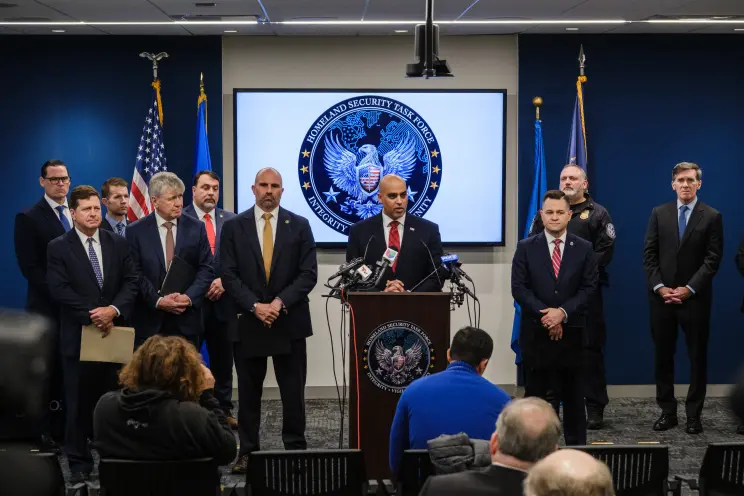
Officials announced the new Homeland Security Task Force New York at a press conference in Lower Manhattan. The U.S. Attorney's Office for the Southern District of New York, Homeland Security Investigations, the FBI, the IRS Criminal Investigations Division, and the New York City Police Department are just a few of the federal and local agencies that are part of it. Officials said that the program is a big step forward in the fight against high-tech crime groups that have changed a lot in the last few years. These groups use technology, international financial channels, and the ability to move across borders to grow their reach. Officials stressed that the task force's structure puts a lot of weight on real-time coordination, smooth data integration, and fast operational response. This is a big change from how investigations used to be done by different groups.
At the announcement, Homeland Security Investigations New York Special Agent in Charge Ricky Patel said the initiative represents a new generation of crime-fighting strategy—one intended to break down bureaucratic barriers that have historically slowed cross-agency efforts. Patel noted that modern criminal networks operate across continents, moving drugs, weapons, money, and people with speed and precision. To counter them, he said, law enforcement must build an equally agile system. The task force will focus not only on major cartels operating throughout the Western Hemisphere but also on emerging groups from Eastern Europe, Asia, and West Africa that have begun infiltrating financial markets, trafficking pipelines, and cybercrime ecosystems in the United States.
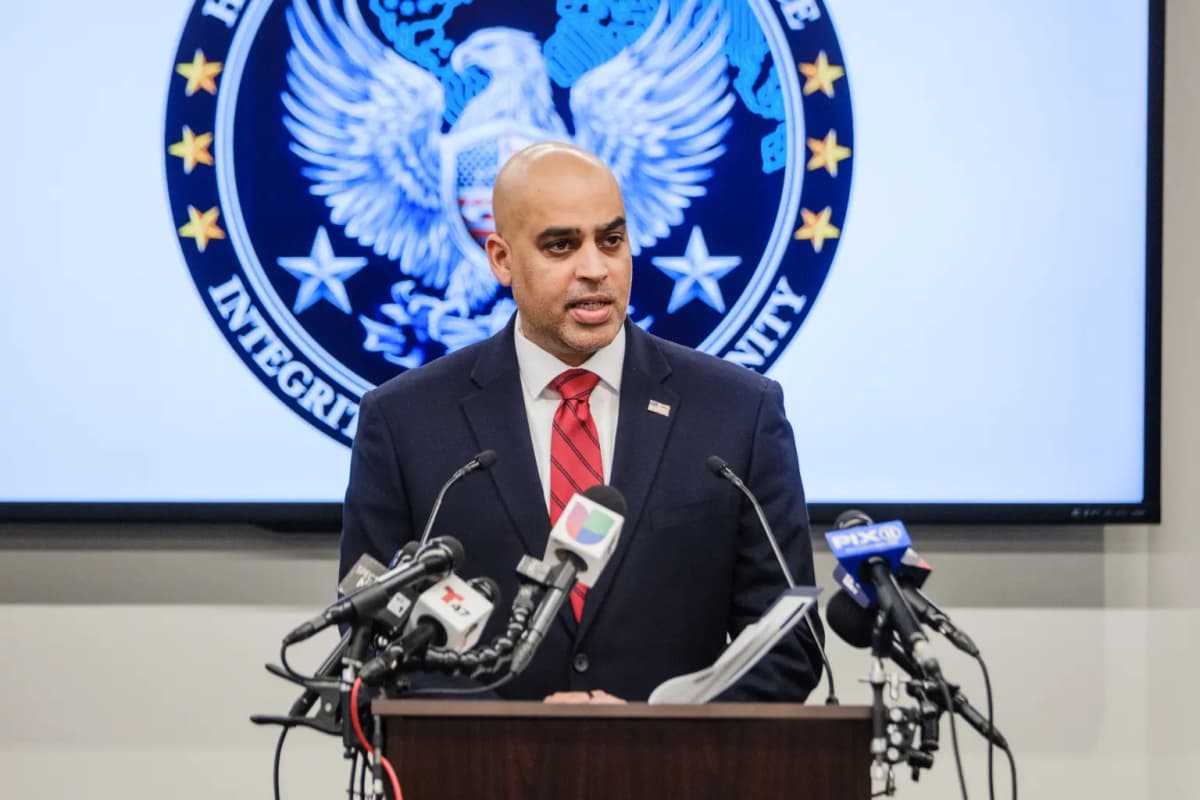
Officials said that one of the task force's best features is that it can get information from federal agencies, local police, and allies from other countries. This framework is meant to help investigators learn more about how criminals work, including the routes they take to get their supplies and the ways they hide their money and talk to each other safely. The task force will also help with proactive investigations, like sting operations, digital forensics, and keeping an eye out for activity that could be linked to a cartel in and around New York City. Authorities also said that better coordination will help stop crimes before they happen in neighborhoods that are already vulnerable, instead of just responding after violence or trafficking has already happened.
Jay Clayton, the U.S. Attorney for the Southern District of New York, said that crime rates in New York City have gone down. But transnational networks are still a big problem because they use gaps in international law enforcement to their advantage. He said that drug dealers and gangs are coming up with new and harder ways to hide their money, like using cryptocurrency and shipping lines that go all over the world. To break up these networks, Clayton said we need to use community policing, technology, and financial literacy. His administration says that the task group would look into things like moving people, selling guns, trafficking in fentanyl, organized retail theft rings, and fraud operations that cost the U.S. economy billions of dollars every year.
Law enforcement leaders were worried that transnational criminal groups had gotten stronger because they often rebuilt their operations after big arrests or drug busts. Officials say that the new task force will look at long-term trends in these groups. This will help agencies break up leadership structures instead of just catching lower-level operatives. Prosecutors will also work closely with foreign partners like Europol, Interpol, and police in Mexico and South America to find criminals, follow the flow of illegal money, and coordinate requests for extradition.
The initiative comes at a time when the United States continues to confront nationwide spikes in drug trafficking, particularly fentanyl and synthetic opioids manufactured in overseas labs. New York officials said that many of these substances pass through complex transnational networks before reaching U.S. cities. The task force will allocate teams to investigate supply-chain intermediaries, counterfeit pill mills, and cross-border partnerships between cartels and domestic street gangs. Authorities also warned that criminal organizations are increasingly using encrypted apps and dark web platforms to coordinate shipments, recruit couriers, and launder proceeds, making old investigative strategies insufficient.
The task force will look into more than just drug dealing. It will also look at crimes like forced labor, smuggling people, extortion, and cyber fraud that happens all over the world. Homeland Security Investigations says that transnational crime groups cost the U.S. economy billions of dollars every year by running online scams that target people and banks. Officials say that having just one task force will help investigators find digital evidence faster, which will show the global networks behind phishing attacks, identity theft rings, and ransomware operations. The IRS Criminal Investigations Division will help keep an eye on illegal money transfers, offshore shell companies, and crypto-wallet activities that are linked to criminal groups.
Local leaders fear the plan might have big effects on public safety in New York City. The NYPD said that transnational criminal groups often work with local gangs to sell drugs and commit violent crimes. The task force's goal is to break up these relationships sooner and cut down on violence later on by making it easier for city investigators and federal agencies to share information more quickly. Police authorities noted that working together is especially vital in neighborhoods that are hit hardest by drug trafficking and gang activity. Better enforcement may help break patterns of crime and exploitation in these areas.
Experts also believe the task force may serve as a model for similar initiatives across the country. Criminal justice analysts say the program reflects a growing understanding that transnational organized crime is now intertwined with local public safety issues. Because of New York’s position as a global financial hub and major international port, they argue that the insights gained from this initiative will be applicable to other urban areas grappling with international criminal activity. Officials hinted that if the program is successful, similar multiagency task forces could be deployed in cities such as Los Angeles, Miami, and Chicago.
The federal government says that the new task force will only work if all the agencies stay committed, buy new technology, and keep talking to people all over the world. The Department of Homeland Security said that to fight modern criminal networks, we need to be involved for a long time, not just for short bursts of enforcement. The launch marks the start of a new era of coordinated crime-fighting efforts in New York that will keep neighborhoods safe while also keeping up with the quickly changing tactics of international criminal gangs.
Why New York's Transnational Crime Task Force Marks a Major Shift in U.S. Enforcement Strategy
The Homeland Security Task Force New York is an example of how U.S. agencies are changing the way they go after international criminal groups. Experts say that the effort shows how important it is to share information over time, base investigations on facts, and work together more closely between federal and local authorities. The task force also shows how quickly criminals change their ways and how quickly law enforcement needs to change its ways to stay ahead of threats around the world. By bringing together experts from different agencies, it hopes to get rid of investigative blind spots that used to slow down cross-border cases. Supporters say that this method helps different agencies work together better to deal with crimes that one agency can't handle on its own.
Experts say that if the task force does its job well, it could change the way the country fights crime gangs that move between countries. It works with a lot of different groups to make neighborhoods safer, keep financial systems safe, and stop crime before it gets to the United States. People who watch say that the task force could change how the federal government spends its money in the future and how states work with police from other countries. It could also mean that more money is spent on tools to find cybercriminals, since digital networks are becoming more and more useful for criminals all over the world. The project could change how the U.S. gets ready for new threats as the world becomes more connected.

Olivia Ramirez
Olivia Ramirez is an investigative journalist from Los Angeles covering corruption, public accountability, and federal oversight.
• Related Posts
Investigators Search Burned Montana Home After Eight Family Members Are Killed
2.Trump Orders DOJ Investigation Into Oil Companies Over Alleged Gas Price Gouging
3.Federal Judge Receives Private Reprimand Over Relationship With Atlanta Police Department Commander
4.Three Dead, 14 Injured in Austin Sixth Street Shooting; Suspect Killed by Police
• POPULAR ARTICLES
FISA Collapse Risk Grows as Trump Backs Acting DNI Pulte
11 June, 2026 • POLITICS
U.S. Raises Concerns With ASML Over Reports of Advanced Chip...
19 June, 2026 • BUSINESS

Cowboys Sign Quinnen Williams to Record $105.9 Million Exten...
11 August, 2026 • SPORTS
What Americans Really Think About Why Political Violence Hap...
20 Jan, 2026 • OPINION
Trump Orders DOJ Investigation Into Oil Companies Over Alleg...
24 June, 2026 • INVESTIGATION
• SEARCH
• TRENDING

Nithya Raman Overtakes Spencer Pratt in LA Mayor Race
08 June, 2026
Powell’s Eight-Year Fed Chairmanship: A Brutal Test of Indep...
16 May, 2026

Cavaliers Blow 22-Point Lead as Knicks Steal Game 1 in Easte...
21 May, 2026